Author: Román Leão

  • Call Me Burroughs: A Life—Barry Miles

    The latest biography by counterculture chronicler Barry Miles is a very thorough account of one of the most interesting writers of the 20th century—not that William S. Burroughs’ writing was the most interesting, not at least at first. The nascent outsider icon eventually falls into the trade, as much of his first three books reworked from recollections in letters to reluctant paramour Allen Ginsberg.

    His best-known book, Naked Lunch, began as routines made up in an attempt to seduce Ginsberg as well as shock and entertain his constant cadre of artists, junkies, and fellow ne’er-do-wells surrounding him in Moroccan exile.

    Anyone with the most cursory interest in the Beats (a sobriquet he never would acknowledge) knows the defining act of Burroughs’ early life is the accidental murder of his wife Joan. It is the struggle to understand what led him to such a horrible moment that finally gives him the courage/derangement to abandon straightforward narrative and jump into the literary deep end.

    Although Miles does a good job of placing Burroughs’ cut-up experiments in context of the mid-century avant-garde art movements, he counts on readers having navigated those texts and doesn’t provide examples of what he struggles to describe.

    In many ways, Burroughs was ahead of his time and really presaged the post-digital revolutionary world in which we now find ourselves buried neck deep. These days, AI chews through reams of supplied texts, spitting out surprising combinations, juxtapositions, and a whole lot of bullshit at the push of a virtual button. Burroughs did it first. With scissors. Like a boss.

    Junkies are not interesting in and of themselves. Of course, it was not surprising to learn the only thing that meant more to Burroughs than writing (and chasing young Arab boys) was heroin. It becomes tiresome and somewhat sad to think of all the work that could have been accomplished had he not spent so much time getting hooked, getting clean, getting hooked, getting clean… etc. Rather than going the rock star route and making the life seem glamorous, Miles’ extensive examination makes a good cautionary tale.

    When all 600 pages were said and done, what really came through, and was surprising, was what a gentle, big heart Burroughs had underneath the ultra-cool exterior, barring his rampant misogyny. He often tried to do the right thing—other times did not and would later regret it—but in the end, the junk always won out.

    To quote Neil Young from an equally dark place, “He tried to do his best, but could not.”
    Twelve Books

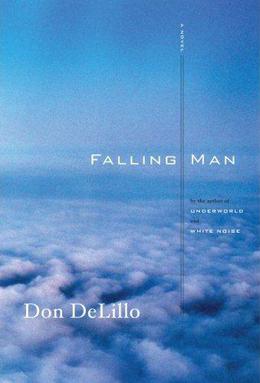
  • Falling Man—Don DeLillo

    In the aftermath of the 9/11 terrorist attacks on Manhattan, many were looking to quintessential New York author Don DeLillo to take on the unenviable task of explaining to us what it all meant.

    DeLillo’s stories have often dealt with the twin specters of terrorism and mass psychosis. It made perfect sense to want to search for deeper meanings lurking just under the surface of his latest novel at the time.

    To his credit, DeLillo didn’t exactly deliver what was expected of him. Instead of a myopic study of well-documented events, Falling Man is a deeper exploration of loss in all its subtle and insidious forms.

    When Lianne’s estranged husband Keith walks away from the collapse of the Twin Towers relatively unscathed and ends up on her doorstep, it is her volunteer work with elderly patients in the early stages of Alzheimer’s that helps her maintain some sense of normalcy. The intimate description of the slow erosion of what has defined those few lives actually threatens to emotionally eclipse the larger tragedy for all its wide-screen horror.

    That is, until the novel’s final act where DeLillo takes us inside a doomed plane and the resulting inferno to show us what those struggling to escape had to go through. DeLillo’s careful, claustrophobic depiction of the exodus from the north tower rivals Hampton Sides’ piece in Americana: Dispatches from the New Frontier for all its nightmarish immediacy.

    Scribner Books

  • No Country For Old Men—Cormac McCarthy

    I seem to be working my way backward through Cormac McCarthy’s oeuver. After the stark black-and-white desolation of his post-apocalyptic book, The Road, this novel’s sepia-colored (or is that dried blood?) Texas landscape seems like an English garden.

    That is not to confuse No Country For Old Men with a Jane Austen exhibition of manners. McCarthy’s main antagonist Anton Chigurh does follow his own code of ethics but it is so far divorced from quote/unquote normal human behavior as to render it unrecognizable.

    Or is it? McCarthy’s talent is to consistently cut away the rotten bandage of civilization revealing the festering wound beneath. This book lays out the path that led to the devastation of the next. There is evil among us. There is evil within us. Perhaps we are well doomed.

    ‎Knopf Doubleday Publishing Group

  • Trust [ficção]

    The lounge was a mine disaster: dark, no air, bad smells. Beer taps floated formless behind the bar. Some startled when a voice emerged to take their order.

    Not Thom.

    A regular, he knew what he wanted, and where it would be placed. He had his cash arranged into bundles of drink plus tip, understanding how important the bartender’s happiness was. He could pour anything. It was only mutual respect that kept Thom from lifting a glass of gall.


    (Written for Esquire’s 79-word challenge. Harder than I thought; I felt like Gordon Lish.)

  • Shit From an Old Notebook: Pour One Out For the 24

    Before the pandemic shook the world like a snow globe full of goat piss and tears, I was enjoying being chauffeured practically door-to-door from our home in the Mt. Tam watershed to the Big City and back by the 24 bus.

    Taking public transportation to and from San Francisco every day affords one a unique perspective on fellow travelers. Buses are, by nature, pretty big, but maybe because they’re so damn ubiquitous—like the proverbial elephant in the room—no one sees them.

    A casual glance out the window and down rewards even the mildly curious (or bored) rider with a veritable cross-section of humanity—a good portion of whom at any time will be engaged in every type of ill-advised behavior for a person operating a motor vehicle.

    Once I started leaving the truck back in the holler, I witnessed “drivers” texting, shaving, cutting their hair, doing their makeup, eating cereal, reading the paper, reading a book, and exchanging “pleasantries” (wink) with their passenger(s).

    This particular morning, however, took the cake. While rolling through the tony enclave of Ross, a driver pulled alongside the bus and started smoking dope off a piece of tinfoil with a blowtorch.

    I couldn’t tell what he was smoking, or which way he was headed—up or down—but he was actually driving better than eighty percent of folks on the road, so I’m guessing some kind of animal tranquilizer cut with raspberry ketones. It was Ross, after all.

    The thing about torches, however, is that they don’t go out if you drop them. Let that one sink in. That driver probably came through everything unscathed, the 24 didn’t. Once society lurched back to life after lockdown, the county pretended like it had never rolled at all. And don’t get me started about the 25.

    Perhaps it was all just a crazy dream.

  • All the Way to the Bank, Laughing [poema]

    She gets a text while sitting across from me
    Her device buzzes like a doorbell and demands
    “Ask him if he’s hungry enough to be a poet”
    Am I willing to commit to the last, best hope?
    That’s what we are going to address…

    While self-anointed apostles, solemn and monkish
    Are spiritually saturated with triviality?
    Is it not obvious by now that in secret moments
    They are dreaming of ravishing magnificent pumpkins?
    We can discuss whether or not I’ve got the juice…

    But to our right, there is a phalanx of bleach-haired women
    Scheming behind a six-foot wall of shrill dissonance
    Their deadened eyes reflect the same old news
    While on the live stream, a fire creeps across the horizon
    Why not ask if I’m hungry enough…

    To boil an oil oligarch while achieving viral visibility?
    Or to cook the books to mine own liking—still pink in the middle
    Without this rapacity, I would be busy dancing
    And following the scent of burning money
    All the way to the bank, laughing

    Photo/Ray Larsen

  • Angels of Gravity [poema]

    Above the quilted patchwork
    We fall upon the Earth
    Like sunshine—arching, laughing
    Breathing in the quick air and becoming
    (Screaming from the top of life)
    Angels borne on wings
    Of true gravity

    Under the endless blue
    Canopy of morning—adrenalized
    Yet dozing in the brief luxury of being
    Too alive to worry of things such as dying

         It is for the heavy

            Who never learn

               To fly

  • Shit From an Old Notebook: I Wish…

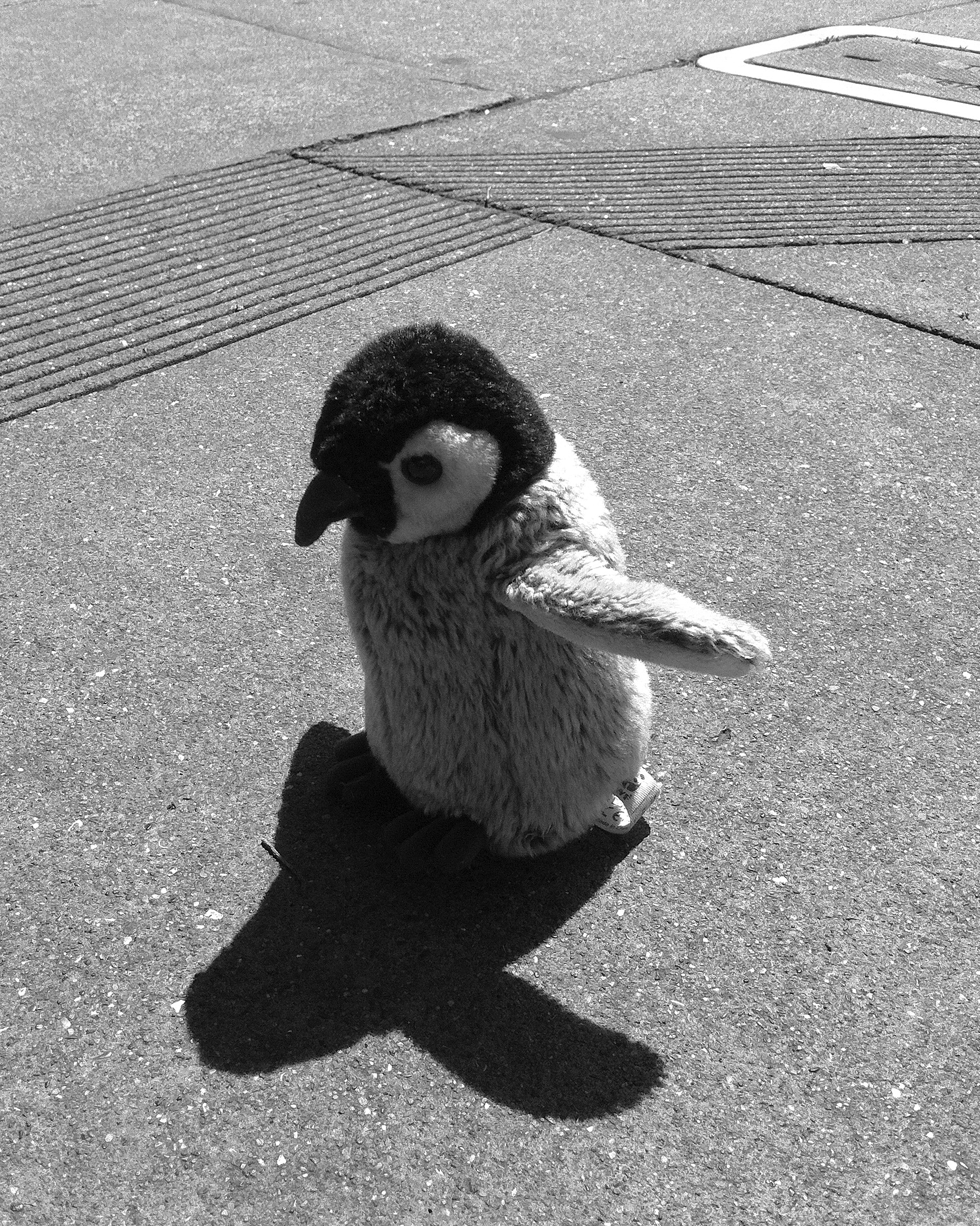
    Buried among my collection of black T-shirts emblazoned with sardonic sayings, an old favorite surfaced the other day. The well-worn shirt has a small graphic of a penguin helplessly flapping its wings while underneath it reads, “I wish I could fly.”

    I pulled it on without a thought before walking into town with the dog. I don’t know what it is about my sartorial sensibility—or overall personal vibe—that seems to invite comment, but I seem to encounter a disproportionate number of people who take an intense interest, and/or umbrage, toward what I wear when leaving the house.

    On this trip, I ran into a woman waiting at the ATM who turned to me, looked me up and down, and asked, “Do you?”

    Do I? I thought. Well that depends. Primarily on what the hell you are talking about. I might. Then again, I might not.

    “Excuse me?” I asked, not entirely sure if she was talking to me. It’s hard to tell, what with Blueteeth and schizophrenia both running rampant on the street these days.

    Do you?” OK, now I’m pretty sure I don’t, whatever it is, and if my dog wasn’t currently rolling around at your feet, I’d have her drive you off. “Do you wish you could fly?”

    What the… ? Oh, the shirt. “’Erm… sure, doesn’t everybody?”

    “Hmmmpf.” The woman turned away dismissively and ended the odd little philosophical tête-à-tête. Was that the wrong answer? Do I really wish I could fly?

    After walking and ruminating on it, I have to admit that, no, flying isn’t really on my short list of things I wish I could do. Understanding my fellow humans, for instance, would best flight in a heartbeat, although I realize that it is slightly less likely to actually happen.

    What do you wish you could do?