Author: Román Leão

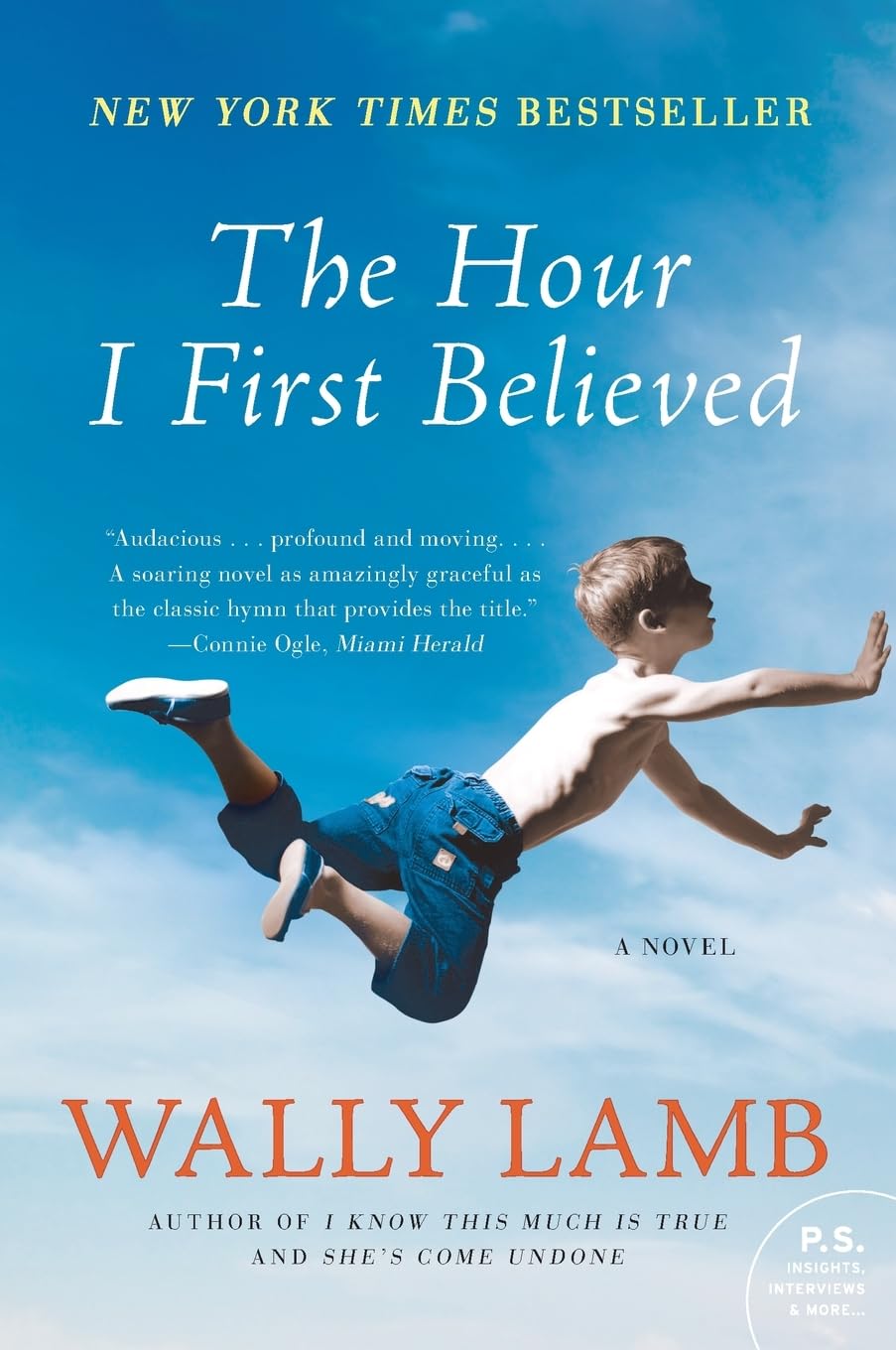
  • The Day I First Believed—Wally Lamb

    Former Oprah Book Club golden boy Wally Lamb took his time writing his third novel, The Day I First Believed, a harrowing look at violence and the effect it has on those caught in its collateral snare. Lamb’s much anticipated follow-up to 1998’s I Know This Much is True is an engaging, terrifying, and at times, nauseating rollercoaster ride, even going as far as to include the feeling when the ride suddenly stops and you kind of lurch out toward the parking lot, dizzy, discombobulated, and trying not to hurl.

    The first half of The Day I First Believed deals with the real world events of the 1999 massacre at Columbine High School. The novel’s protagonist, Caelum Quirk and his wife Maureen both work at the school, although Caelum is called away by the imminent death of an aunt on the East Coast and Maureen is left to live through the shooting on her own. She does survive, but is seriously psychologically traumatized by the experience.

    I remember when the shooting happened, and like everyone, I was shaken up, but I had already been out of high school for 15 years at the time and I think the immediacy of what happened was a little lost on me. Ten years later, I found myself back on campus, this time as a teacher, and the impact of Lamb’s narration scared the living shit out of me.

    Lamb uses snatches of diary entries, news reports, and transcripts of the taunting videos the two gunmen made before going on their rampage to good effect in the first half of the book, it’s in the second half when he resorts to a similar technique to introduce side plots dealing with the Quirk family history that the whole thing lurches to a halt.

    Dana and I saw Lamb speak at Corte Madera’s Book Passage after I had finished the novel, but she hadn’t. I was hoping to glean some sort of insight into what Lamb was trying to do with the second half of this novel, without standing up and asking him straight up, “What the hell?”

    We both found Lamb to be very personable, engaging, and a great storyteller. He mentioned the idea of the labyrinth as the story’s overarching metaphor, and personally, I think he became a little lost in his own maze.

    He mentioned how he inhabits his characters when he is writing, and if what I experienced just reading the first half of the novel is any indication of what that must have been like, perhaps he wandered a little off the reservation. I hope he makes it back.

  • Kingdoms of the Radio: Charlie Perigo 1 [ficção]

    What fiery creation / Streaking across the skies… I love that fucking song! Oh yea, sorry, man. Are we rolling then? I was just about to say how much we all dug that “lost” Lucious Cole album when it came out. I can remember exactly where I was when I heard that Cole had died. The first time. Hang on, I’m getting ahead of myself.

    I was driving back up from surfing the Point break all morning with Chae. You’ve already talked to Chae, right? Man, I had just bought the Olds back then, a beautiful 1970 442 in Nocturne Mist. The top was down, of course, and the wind was blowing her long black hair around like we were in a shampoo commercial.

    I had the radio tuned into a pirate station from out in Boonville and they were playing a block of tunes from Cole’s old band, the National Loaf—not really my favorite as I’ve always been more of an R&B guy: Otis, Sam and Dave, that’s my bag. James Brown! Say it Loud!

    At the end of Cut the Loaf, their last hit before Cole was shitcanned due to his uncool behavior, and alarming—even for that time—drug use, the DJ broke in and laid the trip on us that he was gone. It was still all rumors as to what had actually happened to him. I remember one story had it that he had choked on his own vomit while crashing his motorcycle into an airplane. Hey, man, you have to consider the times, we had just lost Jimi, Janis, and fucking Morrison in quick succession, so we were getting used to shitty news and were becoming… uh, a little cynical.

    Chae was a big fan, especially of the more personal solo stuff he had put out after the breakup. Personally, I can’t stand that singer-songwriter shit. For my money, if you can’t say it with a five-piece horn section, then maybe you should just keep it to yourself; that’s just me. Chae was pretty upset and moped around the rest of the day playing Loaf records until I secretly started being glad that he was dead.

    Cole had checked out at the going age of 27 and everyone made a big deal of him being another member of the “27 club,” yet another case of wasted youth and potential. I’m here to tell you that 27 didn’t seem all that young back then. A lot of us had grown up hard and fast when the ’60s went up like a house fire next door to a bomb factory. All the “flower power” bullshit that you hear about those days had been pretty well defoliated in Vietnam before getting stabbed to death by the Angels out in Altamont.

    I did one tour flying Hueys overseas—lift and assault—and got out just before the shit really hit the fan. It was no picnic, but nothing like those poor fuckers had to deal with after Tet. At least I ended up with a marketable skill after all that grind.

    Back home, I found enough action on both sides of the law to keep me flying with enough under-the-table cash and free weed that I was able to by my own chopper before too long and stay high enough to often forget where I had seen it last.

    My main gig before the farm was flying rescue for the county and fire spotting for the Department of Forestry. I was still keeping the hair high and tight at that time, and as a decorated vet, I didn’t attract too much heat. Of course, I ran night missions in the Triangle come harvest time. Back then, I was the only motherfucker crazy enough to make those runs, although our drunk Uncle Sam was churning out flyers younger and crazier than me by the DC-8 load.

    You could say that I was mixed up with the family out at Girassol from day one. My man Zongo Khumalo was the one that first got permission to be there from the old lady that owned it, back before things got really weird. I used to party with Zongo when I first got back from Vietnam, back when he was still going by what he started referring to as his “slave name.”

    Zongo is tan as a motherfucker, but he’s not Africa tan, if you know what I mean, and the only two things he’s ever been a slave to are weed and pussy. As you can imagine, we hit it off pretty well.
    I do feel partly responsible for what happened, but when I really think about it, the whole downfall of Girassol was Lucious Cole’s fault from the jump.

    You know, if Chae hadn’t been feeling so bummed out that day, I wouldn’t have taken her out there with me and she wouldn’t have gotten mixed up in all that foolishness. I guess some things are just written in the fucking stars.

    I read somewhere lately that the word disaster actually means “bad star.” That’s really when the trouble started, when that bad star showed up.

    Follow the story:
    Kingdoms of the Radio: Serafina’s Gift

  • Superworse—Ben Greenman

    If there is one thing you could say about this slowly aging, psychedelically dented, slightly cynical romantic, it’s that I likes me some metafiction. When Dave Eggers and his crew started up McSweeney’s back in ’98, I thought I had died and gone to a well-lighted, non-denominational heaven (which for some reason, looked a lot like Portland).

    Author Ben Greenman is an editor at the New Yorker and apparently indulges his non-monocled side writing for indie cred publications like McSweeney’s and Nerve. His 2004 novel, Superworse, is supposedly a paperback “remix” of his 2001 hardback effort, Superbad. It’s hard to know to what extent this is true as the novel itself is a Gordian knot of self-reference and too-clever-by-half literary winks and nods. Just the way I like ’em.

    Without giving too much away, the conceit of Superworse is that an old instructor of Greenman’s, one Laurence Onge, is asked to edit the original novel for the soft cover release by Soft Skull Press. Onge is a bit of a megalomaniac and sees references to his history with the author under every well-turned phrase. Onge had gone as far to impose a series of Greenman’s musical numbers onto the earlier version of the book, which have been removed here “at the request of the author.”

    When Greenman quits shuffling the cards and playing with the intricate structure of the 19 chapters of the book, he writes a good short story. Pieces like the twice-removed western, The Theft of a Knife, or the 13th century Florintine political drama, No Friend of Mine, show Greenman’s gift for set and setting, as well as psychological abstraction. Even the more traditionally structured stories in Superworse all leave the reader with a faint sense of unease. Nothing in Greenman’s stories is ever really resolved; we are only seeing as much of the drama as the author thinks we need to see.

    The feeling of vertigo is muted in shorter, McSweenyesque, sketches like, Notes on Revising Last Night’s Dream, and the superlative, What 100 People, Real, and Fake, Believe about Dolores, which masterfully maps the rise and fall of a relationship through short observations from friends, historical and literary figures, and… Superman, who simply believes “that the underwear she wore was the same as the underwear that Lois Lane wore.”

    To illustrate the extent that Greenman, or Onge, or Greenman/Onge has gone to tie all this together, the first nine chapters and the last nine are separated by a pivotal 10th chapter entitled Notes to a Paper You Wouldn’t Understand in which a series of footnotes thematically echo their corresponding chapters while they ostensibly relate minutiae about an absent piece about… well, who really cares, you get the idea. If this all sounds like your cup of mud, well, I’ll see you at the bar.

    Also by this author:
    What He’s Poised to Do: Stories

  • Kingdoms of the Radio: Zongo Kumalo 1 [ficção]

    I came out to San Francisco in ’68… no, ’69; it was right after the whole Manson Family thing. I had been trying to make something happen out there for a couple of years, but the scene had been getting pretty heavy. It seemed like all of a sudden, there was a lot of speed on the street, really nasty shit. Of course, I was no Boy Scout in those days. After staying up for seven days straight—actually pretty badly bent—I had what you could call a mystic vision. Sure, you could call it a psychic break, but I prefer mystic vision.

    I was walking down Broadway headed downhill from Columbus past the Condor and the Hungry I looking to pop up Romolo to the bar under the Basque Hotel for a shot and a beer to help focus my spinning eyeballs. I had no sooner passed under the giant Carol Doda sign—the one with the blinking red nipples—that I heard a voice calling me.

    Now, I had been inside the Condor a time or twenty and had run into, or had nearly been run down by, Carol enough times to recognize her voice. This sounded like her, but… not. It’s hard to explain.

    “Fred,” she said. I was still answering to my slave name at that time. “You are now known as Zongo Khumalo.” Heavy, right? Well, Carol Doda calling me out to change my name would have been weird enough, but here’s the drop; she was nowhere to be seen.

    “Fred Williams no longer exists,” the voice explained. “Zongo Khumalo, it is time to fulfill your destiny.” The voice was really starting to fuck with my head. I kind of stumbled off the curb and that’s when I saw it. It was the sign.

    I don’t mean it was a sign, I mean it was the sign. I know it sounds crazy, but the giant Condor sign was talking to me. I must have stood there an hour in the piss-smelling gutter rapping with the Giant Neon Doda before one of the club’s goons gave me the bum’s rush.
    I had a plan by then anyway.

    I knew this old lady that lived over on Fillmore that had inherited some property up in Mendo. I had been doing some work for her at her place—really nice old pad, lots of old hard wood detailing that you just never find anymore. I must have mentioned to her at some point that I used to live up that way so when she got a letter from an attorney telling her that she now owned this place, she started talking about having me check it out for her.

    I didn’t have any plans to go back up the coast at the time. You know, I thought the City was where it was happening and, more importantly, I had done the Emerald Triangle trip. People think it’s easy—living the life of luxury—but it’s not all bare tits and bong hits. You really have to have your act together out there.

    I shined her on for a few months, not having any intention of taking her up on it. I had seen a lot of those old places that hadn’t been kept up properly. The woods are no joke. You have to keep an eye on the environment or it reclaims what you’ve so carefully carved out as soon as you turn your head.

    All of this was in the back of my mind when the Giant Neon Doda started telling me to go out and prepare a place to ride out whatever was coming down the pike. It really did feel like it was all… what’s the word? Predestined, or something.

    Follow the story:
    Kingdoms of the Radio: Serafina’s Gift
    Kingdoms of the Radio: Charlie Perigo 1

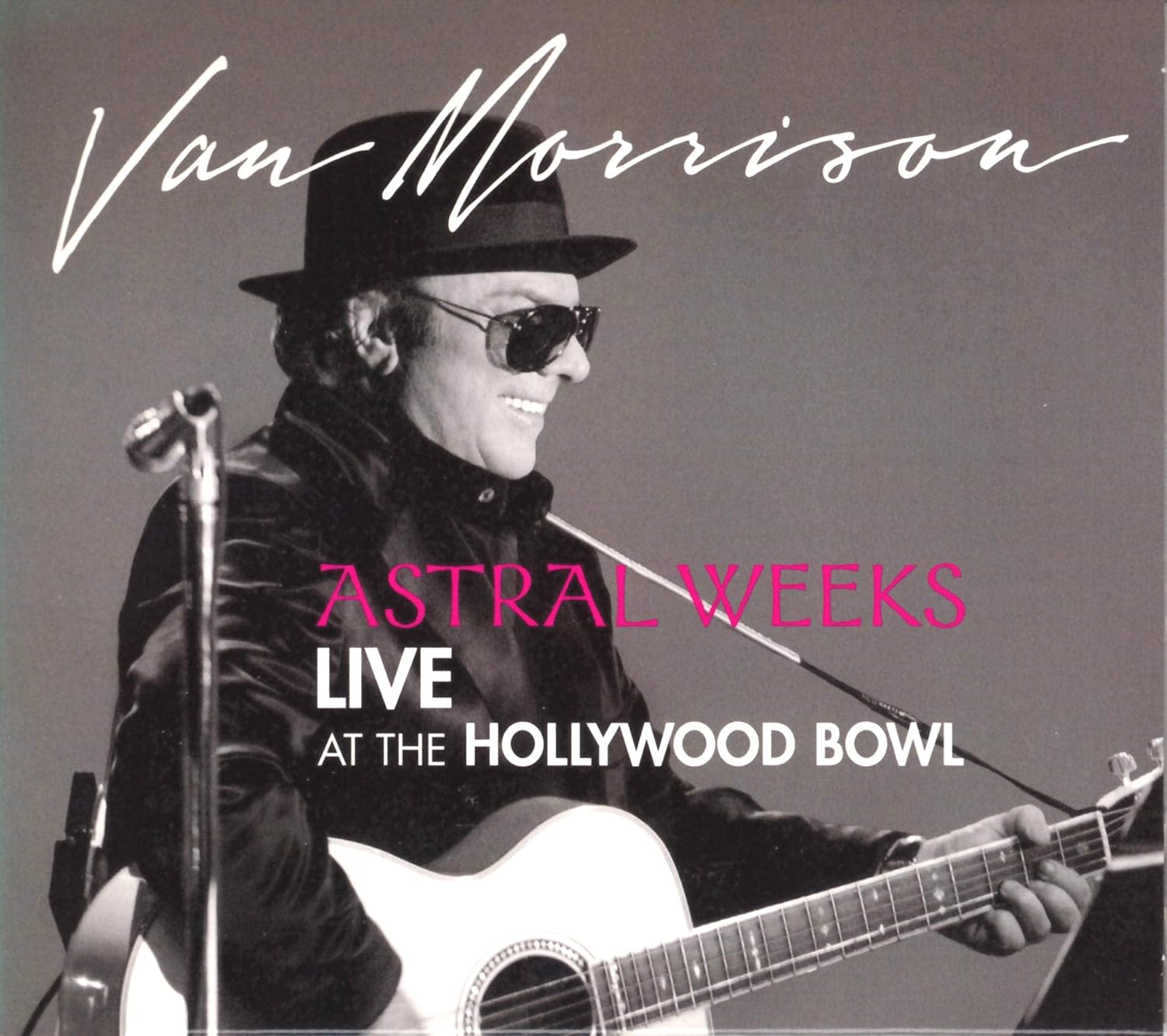
  • Put on This Record: Astral Weeks Live at the Hollywood Bowl—Van Morrison [2009]

    On the list of things I never thought I’d see (or hear), Van Morrison revisiting his seminal 1968 album, Astral Weeks, has lived at the top of the leaderboard for more years than I’d care to count.

    Over the years, the Man has developed a thick-skinned persona that holds stardom and the chasing of an easy buck at a disdainful arm’s length. He is not going to be your trained monkey, no matter how badly you might want it. You want another Moondance? Bollocks. I wouldn’t presume to ask Morrison to look backward any more than I’d ask for his autograph while getting ice cream at Fusco’s.

    However, a closer read of his journey reveals threads that tie disparate pieces of his career together, an ever-present turning toward certain tropes: the streets of Belfast, the green hills and mountain streams of an Irish dream state, a town called Paradise; it all weaves together to create one of the richest imaginary tapestries of any artist living or dead.

    Morrison has said he has always wanted to properly record this group of songs with a string section—the way he heard it in his head back in ’68. Right off the top, the violin prominently featured on the lead track, Astral Weeks, adds to the sonorous gravitas of the original.

    The master’s voice has deepened with age and has taken on more of the characteristics of a band instrument—at times honking like a tenor sax, at others, vibrating and humming low like a cello cradled between the legs of a ginger lass, or more appropriately, an aging Dublin transvestite.

    Which leads me to the most striking difference between the original album and the new performance: the sequence. Morrison has shifted around the order of songs, which fits the dream-like nature of the record. Astral Weeks always struck me as ephemeral, the more you tried to grab it on to it and put it in a box, the more likely it was to turn to smoke.

    To me, the two final songs after Madame George always felt like a coda, or a post-coital afterglow. In any case, coming right after such a masterful vision of humanity at its most exposed and fragile, they weren’t exactly in the best light to be recognized as the subtle masterpieces that they are.

    Slim Slow Slider and Ballerina are recast here as shamanistic trance state-inducing chants guiding the listener toward the heavy hitters of Sweet Thing and Madame George respectively and the state of bliss that Astral Weeks always promised.

    I’m not going to ruin the surprise of all of the little tweaks and changes that Morrison has made to these songs. The hungry 22-year-old singer-songwriter had become a 62-year-old veteran by this time, and some perspective was bound to creep in.

    Half the fun of diving into the updated versions is comparing them to old mental tapes earned from spinning the original record hundreds, or possibly thousands, of times over the years.

    It’s rare for an artist to fully grasp what a particular work means to its admirers—to be able to put his or herself outside a personal memory of the process and see what others see, hear what others hear. I’ve read interviews in which Morrison claimed to not know where these songs came from, and listening to these fresh interpretations, I tend to believe him.

  • Gun, with Occasional Music—Jonathan Lethem

    One of my favorite things about Jonathan Lethem’s work is the sense of fun he imparts when playing with the expectations of genre. His first novel, Gun with Occasional Music, takes the noir of Dashiell Hammett and Raymond Chandler and fuses it with the dystopian science fiction of Philip K. Dick and William Gibson, with a little William S. Burroughs thrown in for leavening.

    The life of Gun’s protagonist, futuristic flat foot Conrad Metcalf, gets complicated when his client on a simple peep job ends up murdered. The problem compounds exponentially when the number one suspect, after Metcalf himself, shows up to hire the detective to find the real killer.

    This brings unwanted heat from the Inquisitor’s Office, an all-seeing, not-so-secret police force that has the power to remove “karma points” from citizens as they see fit. To let one’s karma fall to zero is to become a non-person and awards the unlucky a trip to the (literal) freezer. Further complicating matters, is the fact that everyone is hooked on the government-supplied drugs “Forgettol” and “Acceptol” which makes getting a straight answer from anyone an interesting challenge.

    Not satisfied with a run-of-the-mill paranoid run through one of our possible paths, Lethem ups the ante with super-evolved talking animals, including a gun-toting kangaroo (inspired by a Chandler quote reproduced at the top of the story), a concubine sheep, and disturbing “babyheads,” human toddlers who have had the same mutagenic fast-forward applied to them, making them little alcoholic fatalist assholes. Which tracks.

    In 2020, literally moments before COVID fucked everything sideways, the movie trades were abuzz with news that the book was under development for a television series. Johan Renck, best known for his harrowing Chernobyl, was named as director, with Jason Bateman’s Aggregate Films producing. It has been crickets since then, however.

    Talking kangaroos and the like are tricky to pull off without looking ridiculous, and like the creatures in David Cronenberg’s 1991 take on Burroughs’ Naked Lunch, perhaps left to the individual widescreens in our heads.

    Also by this author:
    Chronic City: A Novel
    The Wall of the Sky, the Wall of the Eye

  • The Prince is Dead, Long Live the Prince (of Darkness)

    John “Ozzy” Osbourne made quite a career out of the moniker, “Prince of Darkness.” The guy knew a good hook when he saw (or heard) one, but he was more than that to a few generations of fans now. Ozzy was a hero to every misfit who struggled to find their place in this crazy world. He was—and I mean this with all due respect, and today, a broken heart—he undisputed King of Fuckups.

    Anyone who has read his 2011 autobiography, I Am Ozzy, knows that the man should have died about a dozen times before Black Sabbath even started, that he wasn’t killed seems to imply some sort of preternatural intervention. It’s not our place to guess the intention of powers beyond our understanding, but I am glad it seemed to work in our favor.

    I first heard Black Sabbath on a purloined 8-track compilation, We Sold Our Soul For Rock ‘N’ Roll. I don’t remember who stole it or how it came into my possession, but, in retrospect, it’s only fitting that this gateway drug appeared by illicit means.

    Ozzy’s plaintive wail of, Oh, no! Please God help me! in the titular track makes the hair on the back of my neck stand up to this day even though I’ve heard it easily thousands of times. This was a guy in serious trouble, perhaps at the end of a road that started with possession of hot merchandise before leading to… to what? I had to know!

    The second song on that collection, The Wizard, follows the track order on the band’s first album and allows a small slice of light to cut through the incessant Birmingham cloud cover. Maybe the wizard will make everything all right after all. Nope.

    It’s the third track that sealed my fate as an Ozzy fan for nearly 50 years. Skipping the needle ahead past an iconic suite of jazz-inflected proto-metal from the Black Sabbath album, Warning, comes as, well… a warning, but like in one of those Japanese horror films, if you’ve heard it, it’s too fucking late for you.

    The crazy thing is, Warning is not even a Black Sabbath song, it’s a cover of a 1967 single by The Aynsley Dunbar Retaliation. The what now, you ask? And you would be right. At the time, Dunbar was hot from drumming on John Mayall’s Bluesbreakers’ A Hard Road, which featured, wait for it, future Fleetwood Mac instigator Peter Green. I swear, were there like twenty people left in England in the ’60s?

    Somehow Sabbath takes this throwaway 45 and turns it into a signature statement of intent. Geezer Butler’s bass announces the proceedings before Ozzy sets the scene:

    Now the first day that I met ya / I was looking in the sky / When the sun turned all a blur / And the thunderclouds rolled by

    And then it gets worse for our man, Oz:

    The sea began to shiver / And the wind began to moan / It must’ve been a sign for me / To leave you well alone

    I have yet to find the right vocabulary to explain what it is in Ozzy’s delivery of the word, “shiver,” but there is a realness to it. Even though he didn’t write the song, he saw that shit. You can’t convince me that he wasn’t drawing on some experience of being out there in that moaning wind, metaphorically, or not.

    The short chorus comes up fast with Ozzy lamenting:

    I was born without you, baby / But my feelings were a little bit too strong

    It’s the way he hits the word “strong” that kills me, because it is not. It is anything but, it may not even be in key, and yet it somehow incorporates all the pain and frustration of the outsider. It is not a howl against the void, but more like a capitulation with the dark.

    After a serious masterclass in band dynamics, Ozzy crawls his way back to the mic:


    Now the whole wide world is movin’ / ‘Cause there’s iron in my heart / I just can’t keep from cryin’ / ‘Cause you say we’ve got to part / Sorrow grips my voice as I stand here all alone…

    Game over. Fucking sorrow has gripped his voice, man! Has there ever been a more legitimate take on the word? Billie Holiday may have delivered one, but her voice, even at its most vulnerable, was beautiful. Ozzy’s delivery is tantamount to crying ugly.

    I remained a devoted fan through his being sacked by Sabbath and I reveled in his jaw-dropping rebirth with Randy Rhoads, Bob Daisley, and Lee Kerslake [say their names], and beyond. I have to admit that I harbored a few misguided proprietary feelings toward our man when he became a reality show until I realized that there was enough Ozzy for everyone. Until today when there wasn’t.

    If anyone has ever earned a rest, it’s Ozzy. I don’t know what else to say. There’s iron in my heart.

  • Submission (A Correspondence in Three Parts)

    (1)
    Greetings XXXX XXXXXXXX editors,

    I wanted to thank you all for sending my return envelope back; I’m just not sure what kind of message you were trying to send. Was the empty envelope a metaphor for the howling void that we all must someday face? Or perhaps my submission just left you speechless and unable to respond? I’m sure that with time, and the proper medicine, I’ll suss it out and all will finally be revealed… or, I could just ask. So, ’erm… what’s the deal?

    Yours envelopically,
    Ray Larsen

    (2)
    Hi Mr. Larsen,

    I hope you haven’t been deteriorating into madness while awaiting our reply.

    I apologize for the empty envelope and the subsequent foray into the land of unanswered questions. While I would like to claim artistic genius and expressive intent, it was sadly just a mistake. As the assistant editor (i.e. graduate student) I possess a very fine skill set for stuffing, licking and sending envelopes. Your envelope, unfortunately, missed the crucial first step. And now I must re-evaluate my postal prowess, sigh.

    Well, at the very least I can relieve your sufferings—the envelope was meant to hold a lovely blue little slip, bearing our logo and this message: “Thank you for your recent submission to XXXX XXXXXXXX XXXXXX. Though we are unable to include your work in this issue, we are glad that you gave us the opportunity to consider it. We wish you success in placing your work elsewhere. Thanks again, The Editors.”

    It tries very hard to be friendly while inevitably informing you that we are crushing dreams. We don’t like that part of the job much and we know that you like it even less, so really, I’m quite sorry that you were subjected to the empty envelope.

    Really it’s quite a profound little piece of paper. The color is really quite nice. And the size is wonderful. I’ve spent tens of minutes in the copy room, brushing off my math skills to figure out exactly what size will fit into a variety of envelopes.

    If you would like the little blue slip that the envelope was meant to contain, I’ll happily send it along. It’s a very nice slip.

    Yours apologetically,
    XXXXXXX XXXXXX
    Assistant Editor
    XXX

    PS Hopefully this little blunder doesn’t mean you will be too incapacitated by the proper envelop-related medications to submit to us in the future!

    (3)
    Greetings Ms. XXXXXX,

    Thank you for your enlightening, entertaining, and timely response to the vacant envelope imbroglio. At no time did I mean to impugn your prowess as it applies to stuffing, licking, etc. I am sure that the sheer volume of correspondence lends itself to the occasional unintended mystery.

    Please don’t let this aspect of your responsibilities weigh any heavier on your conscience than does the slip itself. I, for one, have started an art project with the myriad beautifully colored papers that have been sent my way. I am sure that the one you have been charged with discharging is lovely.

    I imagine it to be a medium Persian blue, as was the binding of Bailey’s A Treatise on the Seven Rays, reflecting a possible theosophical bent on the part of XXX. Or perhaps it is a less esoteric, but no less historically relevant, Prussian blue—one of the first synthetic pigments ever developed, and interestingly, an antidote for heavy metal poisoning.

    I don’t want to make more work for you, however, and I will simply wait until my next submission works its way through the editorial process. I will force myself to be content with the seasonally apropos light spring green version I still hold and cherish.

    Yours in the wild blue yonder,
    Ray Larsen

  • What’s in a Name? [Pt. 2]

    I was born Raymond Andrew Larsen in late-July of 1966, closing in on six decades ago as of this writing. Raymond is a family name, after a great-uncle on my father’s side, one of five born to an immigrant couple from the Azores. I think he helped keep my father on the straight and narrow after his father was out of the picture, a task with which even God themselves had limited obvious success.

    I have long suspected that my middle name came from Andy Nickolatos who happened to own the Black & White liquor store on the corner of Main St., a block and half from the house. I can neither confirm or deny—given that all parties, apart from myself, have passed on*—that the bestowal of Andrew either settled a bet or a sizable tab. I wonder what a middle name was worth in mid-60s commodities, and what that might translate into 21st-century dollars. It was probably a dodgy investment at best.

    By all accounts, my grandfather, a Dane named Larsen was a real piece of work. He and my grandmother, Elvira, were divorced—a rarity for Catholics in the 1950s—and he died when my dad was still pretty young. To this day, I have never seen an acknowledged photograph of the guy, although after dad passed I found a souvenir Los Angeles restaurant pic of him as a young kid sitting with two uptight-looking people. Not his usual crowd, to be sure.

    I know that Larsen in Danish means “son of Lars.” Having lived in California my whole life, the only Lars I know of is the drummer for Metallica, but we are roughly the same age. It would have been nice to fall into some of that Master of Puppets money, though.

    As dad got older, he dropped more stories of his strained relationship with his pater familias, none of them all too flattering. Of course, it was Louie’s name to claim or disavow, so we’re stuck with it, a tie to a lineage I really know little about. I’ve read that, like the Portuguese, the Danes have historically been really into boats, fish, and faded empire, so they should be my kind of people. Maybe we just got a bad one.

    After living under the Scandinavian surname for a half-century, I figured my pen name should pay homage to the side of Dad’s family I actually related to. Leão is Portuguese for lion, and given that, if pressed, I identify as a double Sun sign Leo, I can get behind that.

    Part of writing under another name, is the freedom a different headspace can afford you. At this point, Ray Larsen has done all kinds of different things, but they have followed a certain, if avowedly circuitous, path. This Leão motherfucker, though, who knows what shenanigans he might get up to?

    Quite coincidentally, the statement, “I read,” is translated in Portuguese as, “eu leio.” As far as Roman goes—or incongruously, “Román,” which denotes a Hungarian provenance (I don’t remember what I was smoke… erm, thinking)—it has historically simply meant, “a citizen of Rome.” If you’ve read your Phillip K. Dick, you’d know that we are all citizens of the Roman Empire, which never really ended but manipulates our materialistic and spiritually bankrupt world to this day.

    Wow, that got dark.

    As far as I know, Román Leão has no middle name, although he may be taking bids.

    *OK, Mom is still around, but either a) those characters cooked up a story that she believed. It was pretty early in the relationship, or b) she knew the gross percentage of GDP that the tab entailed and signed off on it. Either way, she ain’t sayin’.

  • What’s in a Name? [Pt. 1]

    I was enjoying the dubious honor of teaching English to Vallejo freshmen when, while getting ready one morning, a national news program featured a fellow word warrior from somewhere in the Midwest who had been fired when it was discovered that she had the temerity to have been writing Harlequin romances on the side.

    Now, let us just set aside the injustice of high school teachers having to do anything else besides the insanely demanding job listed on their CV, and let’s hope that the woman in question was writing for the same reason the rest of us do: she had to, or burst.

    Let’s look instead at the shortsightedness of a corn-fed school board deciding that they didn’t want someone, and I fight the impulse to use all caps here, who had actually written and published books to teach their children how to (checking notes)… write.

    I have never had the pleasure of reading a Harlequin, but as a kid who devoured Stephen King, William S. Burroughs, and Charles Bukowski, I am fascinated to know how much damage the board thought a formulaic romance might inflict on a young, impressionable mind. (We aren’t going to mention Clive Barker here as there may have been some actual scarring from those stories, although nothing some Richard Brautigan didn’t smooth over.)

    My point being, one would be hard pressed to find someone who had been driven to a life of debauchery and indulgence from something they read, and if they had, good for them. Given that I was working on my first novel at the time, however, and considering the amount of sex, drugs, and… Sasquatch it contained, I started thinking that a nom de plume, might be called for, perhaps even a nom de guerre.