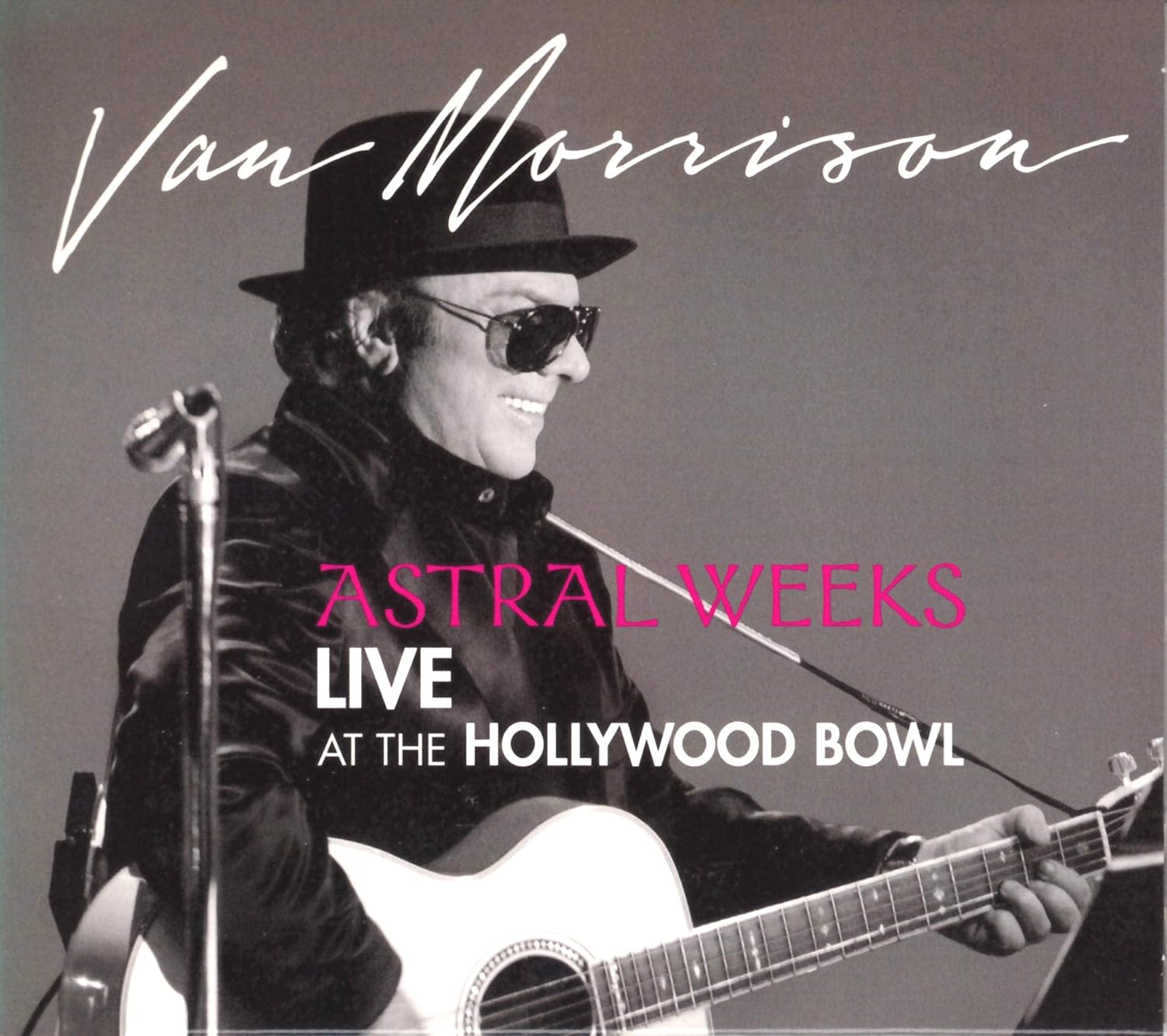
On the list of things I never thought I’d see (or hear), Van Morrison revisiting his seminal 1968 album, Astral Weeks, has lived at the top of the leaderboard for more years than I’d care to count.
Over the years, the Man has developed a thick-skinned persona that holds stardom and the chasing of an easy buck at a disdainful arm’s length. He is not going to be your trained monkey, no matter how badly you might want it. You want another Moondance? Bollocks. I wouldn’t presume to ask Morrison to look backward any more than I’d ask for his autograph while getting ice cream at Fusco’s.
However, a closer read of his journey reveals threads that tie disparate pieces of his career together, an ever-present turning toward certain tropes: the streets of Belfast, the green hills and mountain streams of an Irish dream state, a town called Paradise; it all weaves together to create one of the richest imaginary tapestries of any artist living or dead.
Morrison has said he has always wanted to properly record this group of songs with a string section—the way he heard it in his head back in ’68. Right off the top, the violin prominently featured on the lead track, Astral Weeks, adds to the sonorous gravitas of the original.
The master’s voice has deepened with age and has taken on more of the characteristics of a band instrument—at times honking like a tenor sax, at others, vibrating and humming low like a cello cradled between the legs of a ginger lass, or more appropriately, an aging Dublin transvestite.
Which leads me to the most striking difference between the original album and the new performance: the sequence. Morrison has shifted around the order of songs, which fits the dream-like nature of the record. Astral Weeks always struck me as ephemeral, the more you tried to grab it on to it and put it in a box, the more likely it was to turn to smoke.
To me, the two final songs after Madame George always felt like a coda, or a post-coital afterglow. In any case, coming right after such a masterful vision of humanity at its most exposed and fragile, they weren’t exactly in the best light to be recognized as the subtle masterpieces that they are.
Slim Slow Slider and Ballerina are recast here as shamanistic trance state-inducing chants guiding the listener toward the heavy hitters of Sweet Thing and Madame George respectively and the state of bliss that Astral Weeks always promised.
I’m not going to ruin the surprise of all of the little tweaks and changes that Morrison has made to these songs. The hungry 22-year-old singer-songwriter had become a 62-year-old veteran by this time, and some perspective was bound to creep in.
Half the fun of diving into the updated versions is comparing them to old mental tapes earned from spinning the original record hundreds, or possibly thousands, of times over the years.
It’s rare for an artist to fully grasp what a particular work means to its admirers—to be able to put his or herself outside a personal memory of the process and see what others see, hear what others hear. I’ve read interviews in which Morrison claimed to not know where these songs came from, and listening to these fresh interpretations, I tend to believe him.
 Román Leão