Tag: classic-rock

  • From Big Change to Big Crime in 229 Days

    In January of this year, two days after President Biden’s Farewell Address, I flipped on YouTube to catch up, having long given up on network news. The first thing I saw is what looked to be an agricultural landscape complete with a tiny tractor slowly moving under a text overlay reading BIG CHANGE in a distressed serif font.

    Ten seconds into the video, a squeal of feedback prompted the camera to reel back revealing the metal bars of a fence while the familiar tones of Old Black, Neil Young’s signature ’53 Gibson Les Paul, bashed out a three-chord stomp.

    Big Change is coming’, coming’ right home to you / Big Change is coming’ you know what you gotta do. Heraclitus himself couldn’t have put it better when he wrote in the 5th Century BCE, “Everything changes and nothing remains still,” or the more familiar, “Change is the only constant.”

    Young’s new song threw a bit of a curveball, however, when in the very next line he sang, Big Change is coming’, could be bad and it could be good. It is in this moment of leaving room for hope that I think elevates this song beyond the myopically political. Even the most news-adverse among us could feel that we were in for a tectonic season of shift.

    I’ve heard the Biden administration described as a Restoration presidency, referring to when the English monarchy was brought back in 1660, after Oliver Cromwell’s unsuccessful authoritarian stab at a Commonwealth.

    The reinstatement of a tired form of government, in England’s case, the monarchy, in our case, the gerontocracy, was a clumsy metaphor, but one must admit that it wasn’t just ol’ Joseph Robinette, God bless him, that was looking tired.

    The whole neoliberal worldview that has provided the country’s raison d’être, and slow suicide, since the 1970s, was creaking under global pressures and the weight of all the money that a new class of oligarchs had sucked up from the shrinking middle class.

    As much as I would like for Biden to have pushed through more of a progressive agenda, perhaps things just weren’t fucked up enough for that to have been an option. Like the animatronic Peter Pan says as he eternally jumps out the window into the darkness of his signature Disneyland ride, “OK, everybody, here we go!”

    Or as Uncle Neil says, Big change is coming’, could be bad, and it could be great!

    With Vladimir Putin’s Russia driving through Ukraine for a warm water port in the Black Sea and TFG threatening to seize the Panama Canal and the soon-to-be-thawed northern sea routes around Greenland, the world was looking increasingly less like a game of Risk, and more like Rock-em Sock-em Robots.

    Smash cut to Labor Day and Putin is still bombing the bejeezus out of Ukraine despite TFG having allowed the international war criminal to fly to Alaska, a place that the dotard repeatedly referred to as, “Russia,” leading some to worry that he was going to give the state back after almost 160 years.

    Israel is still systematically destroying Gaza and its people. Oh, and TFG is sending National Guard troops to American cities to do… what, exactly? This is all to admit that the tenuous hope against hope that everything “might be great,” was… let’s just go with overly optimistic.

    Seven months and change later, Big Change has been usurped by Big Crime, as desperate and close to punk rock as this soon-to-be octogenarian has ventured in a while. Don’t need no fascist rules / Don’t want no fascist schools / Don’t want soldiers walking on our streets / There’s big crime in DC at the White House!

    Why it has once again fallen to Neil Young to strap on the Gibson and man the barricades is beyond me. This should be a golden age for angry young bands, but as Donald Rumsfeld so famously said, “You go to war with the army you have.”

    I hope that when I’m 79 that I still have the gumption (and the freedom) to rail against things that I think are wrong. I also hope that if Neil gets rounded up by TFG’s masked mall-thugs, he ends up back in his native Canada, and not El Salvador, Eswatini, or South Sudan.

    The shit is hitting the fan and leave it to Shakey Deal and Old Black to sound the clarion. No more money to the fascists / The billionaire fascists / Time to blackout the system / No more great again
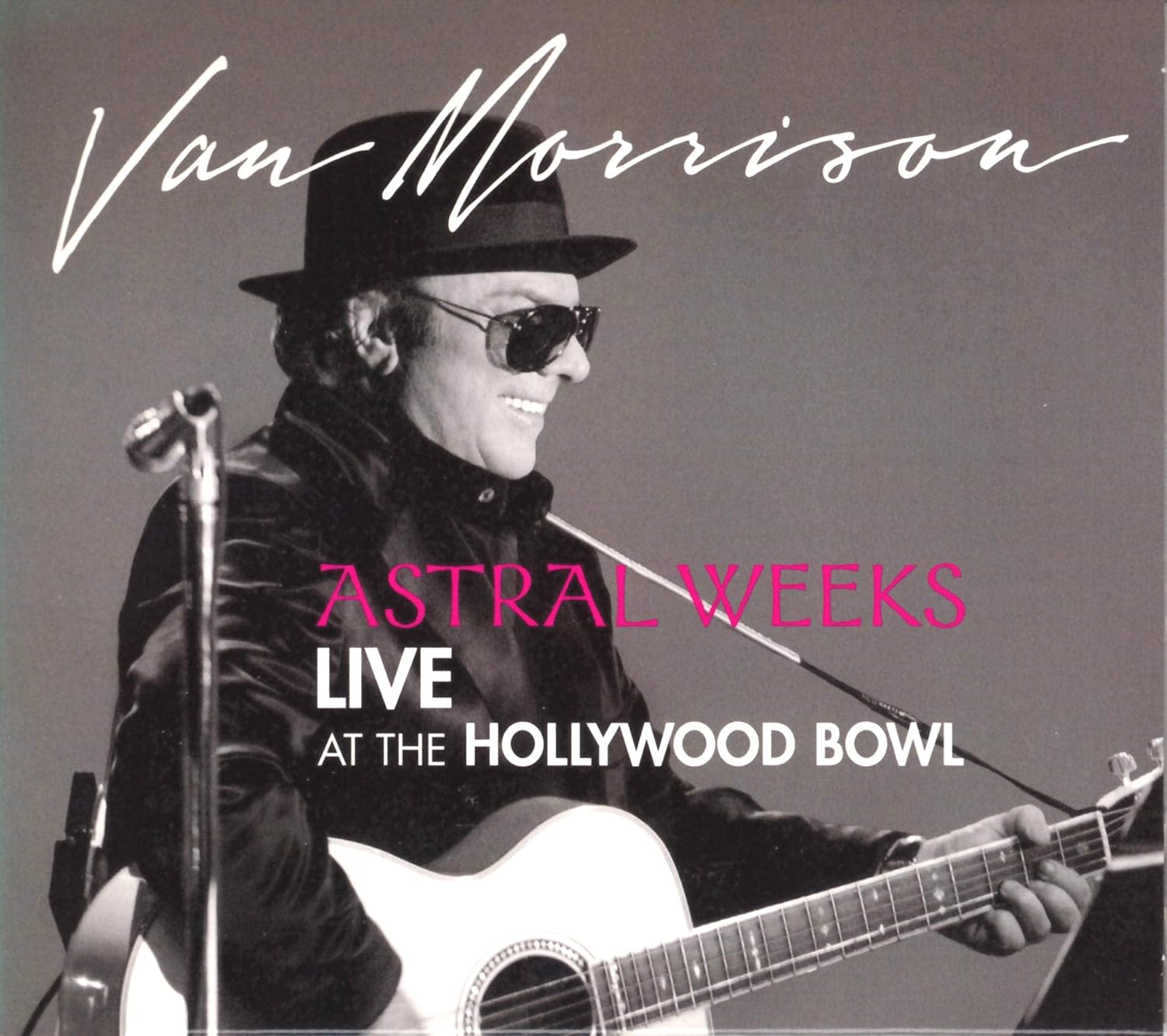
  • Put on This Record: Astral Weeks Live at the Hollywood Bowl—Van Morrison [2009]

    On the list of things I never thought I’d see (or hear), Van Morrison revisiting his seminal 1968 album, Astral Weeks, has lived at the top of the leaderboard for more years than I’d care to count.

    Over the years, the Man has developed a thick-skinned persona that holds stardom and the chasing of an easy buck at a disdainful arm’s length. He is not going to be your trained monkey, no matter how badly you might want it. You want another Moondance? Bollocks. I wouldn’t presume to ask Morrison to look backward any more than I’d ask for his autograph while getting ice cream at Fusco’s.

    However, a closer read of his journey reveals threads that tie disparate pieces of his career together, an ever-present turning toward certain tropes: the streets of Belfast, the green hills and mountain streams of an Irish dream state, a town called Paradise; it all weaves together to create one of the richest imaginary tapestries of any artist living or dead.

    Morrison has said he has always wanted to properly record this group of songs with a string section—the way he heard it in his head back in ’68. Right off the top, the violin prominently featured on the lead track, Astral Weeks, adds to the sonorous gravitas of the original.

    The master’s voice has deepened with age and has taken on more of the characteristics of a band instrument—at times honking like a tenor sax, at others, vibrating and humming low like a cello cradled between the legs of a ginger lass, or more appropriately, an aging Dublin transvestite.

    Which leads me to the most striking difference between the original album and the new performance: the sequence. Morrison has shifted around the order of songs, which fits the dream-like nature of the record. Astral Weeks always struck me as ephemeral, the more you tried to grab it on to it and put it in a box, the more likely it was to turn to smoke.

    To me, the two final songs after Madame George always felt like a coda, or a post-coital afterglow. In any case, coming right after such a masterful vision of humanity at its most exposed and fragile, they weren’t exactly in the best light to be recognized as the subtle masterpieces that they are.

    Slim Slow Slider and Ballerina are recast here as shamanistic trance state-inducing chants guiding the listener toward the heavy hitters of Sweet Thing and Madame George respectively and the state of bliss that Astral Weeks always promised.

    I’m not going to ruin the surprise of all of the little tweaks and changes that Morrison has made to these songs. The hungry 22-year-old singer-songwriter had become a 62-year-old veteran by this time, and some perspective was bound to creep in.

    Half the fun of diving into the updated versions is comparing them to old mental tapes earned from spinning the original record hundreds, or possibly thousands, of times over the years.

    It’s rare for an artist to fully grasp what a particular work means to its admirers—to be able to put his or herself outside a personal memory of the process and see what others see, hear what others hear. I’ve read interviews in which Morrison claimed to not know where these songs came from, and listening to these fresh interpretations, I tend to believe him.

  • Life—Keith Richards

    Whether or not you will be captivated by Rolling Stones guitarist and all-around bon vivant Keith Richards’ autobiography all the way to the end of its 547 pages swings on a couple of factors.

    Number one: How much do you still like and care about the Rolling Stones?

    Number two: How much you can stomach reading about the sordid intricacies of heroin addiction?

    If those two caveats check out, then this book has a lot to offer in the way of insightful musings on the emergence, “maturation,” and decline of rock ’n’ roll, as well as dispatches from the gutter as harrowing as anything William S. Burroughs phlegmatically coughed up in junk-sick reverie.

    Occasional partner-in-crime Tom Waits puts it best towards the end of the book when he describes Richards as “a frying pan made from one piece of metal. He can heat it up really high and it won’t crack, it just changes color.” Spiritually changing his color from pasty postwar English white to the richer tones of the blues artists he and his friends immortalized became an obsession early on, and one that somehow, against all odds, he managed to pull off.

    Richards recalls fondly of being accepted on the “other side of the tracks” much more openly than in the “Whites Only” areas of the still-segregated American South. Richards writes in his journal about coming to the United States for the first time, “Finally I’m in my element! An incredible band is wailing… so does the sweat and the ribs cooking out back. The only thing that makes me stand out is that I’m white! Wonderfully, no one notices this aberration. I am accepted. I’m made to feel so warm. I am in heaven!”

    This ability to fit in wherever he finds himself belies a truthfully warm and open heart on the part of a young Keith Richards. You never get the sense that this English kid is culture slumming, he has done his homework, paid his dues, and remains respectful and—as an outsider in an uptight society still struggling to shrug off the ’50s—simpatico. At least until the drugs kick in.

    Later in the narrative, Richards bemoans the way that the other half of his musical partnership has become too enamored with controlling all aspects of the now multi-million dollar business interest called the Rolling Stones. This is after spending most of the ’70s in a narcotic fog, forcing his band mates to practice, record, and exist on “Keith time.” He doesn’t seem to realize that he has passive-aggressively set the agenda for years by placing himself outside of the “normal” constrains of time, laws (local, Federal, and international), sleep, etc.

    What saves this tale from being just another tale of debauched rock royalty (not that there’s anything wrong with those) is Richards’ voice. Life is written very much in Keef’s voice, along with reeling asides, obscure English slang, and most of all, heart. As much as they squabble and moan about each other, the Rolling Stones have been tempered by a half-century of dealing with each other’s shit.

    Richards explains, “Mick and I may not be friends—too much wear and tear for that—but we’re the closest of brothers, and that can’t be severed… Best friends are best friends. But brothers fight… At the same time, nobody else can say anything against Mick that I can hear. I’ll slit their throat.” Judging from his track record, and the sticker in his boot, he may end up doing just that.