Tag: fantasy

  • Kingdoms of the Radio: Zongo Meets The Stick [ficção]

    The self-ordained Zongo Khumalo descended the short staircase that led out of the back of Sammy’s Burger Shack where he had just been asked to turn in his whites and, in the words of the owner—a self-avowed asshole not named Sammy—“get the fuck out.”

    Khumalo reached into the breast pocket of the scratchy fuchsia polo shirt he had been required to purchase for the distinct privilege of flipping not Sammy’s shitty burgers and removed a battered red and white Marlboro soft pack containing a half-smoked joint of sinsemilla, the first half of which may have had a deleterious effect on the morning’s events.

    “Fuck it,” he announced to the Pacific Ocean that slapped just beyond the asphalt escarpment marking the edge of the Burger Shack’s domain and held a good bit of related detritus to help bolster the claim. A profusion of small star-shaped flowers of white, pink, and purple competed with similarly-hued burger wrappers for the privilege of being the landscaping’s most prominent feature.

    Khumalo had just taken a large hit when a convertible Oldsmobile came smashing into the Shack’s gravel parking lot like an iron meteorite. Just when he thought the heavy chunk of Detroit steel was going to end up becoming an artificial reef, the driver locked up the disc brakes and jerked his wheel to the left sending the machine into a four-wheel slide and kicking up a fuck-ton of dirt, rocks, and duck shit in the process.

    When the dust finally cleared, Khumalo expected to lock eyes with a typical wired-to-the-gills gearhead or one of the usual gonzo surfers that frequented the Shack after the morning break; instead, he was surprised to see—back-lit by the Sun still-rising toward apogee—a spitting image of Jesus the Christ himself.

    Charlie Perigo threw open the perfectly balanced driver-side door—back when Detroit rolling stock still had bodies “designed by Fisher”—and immediately zeroed in on Khumalo who stood agape in the slowly settling cloud of debris dressed in his grease-spattered polo with his joint hanging from his bottom lip held by a thin scrim of moisture.

    “Hey, brother,” Perigo addressed the incredulous ex-line cook. “What’s burnin’?” Khumalo turned back toward Sammy’s to see a plume of black smoke climbing out of the slowly turning rusted rooftop turbine vent.

    “That would probably be the lunch rush,” he answered, retrieving the now-extinguished joint and pointing toward the shack with it.

    “Not that,” the apparent maniac pointed at his hand. “That.”

    “Oh, right,” Khumalo recalibrated his first impression of Big J’s stunt double as he fumbled for his Zippo lighter.

    The two born iconoclasts connected with the natural force of a chemical reaction, Khumalo soon finding himself in the 442’s passenger seat, hanging on for dear life as the appropriately-named Perigo took the sharp shoreline turns at a full four-barrel roar.

    Perigo shouted something over the car’s 400-cubic-inch engine in maximum thrum as whole dinosaur dynasties were vaporized and shot out the dual exhaust, never to be thought of again.

    “What?” Khumalo shouted back in a register he didn’t recognize. As the Oldsmobile’s tight suspension groaned to counteract the brutal physics involved in the questionable choices Perigo was making on the turns, the force of inertia bent him toward the driver whom he began to suspect was completely insane.

    “I asked you,” Perigo shouted as he slammed the Hurst shifter into a higher gear, “have you ever been shot?” Before Khumalo could answer one way or another—and to tell the truth, he would have said “no,” had he time to gather his wits about him—Perigo lifted his white T-shirt to reveal an even whiter scar on his abdomen. The former cook took the bait.

    “Who shot you?” Williams finally played his part perfectly, coming in on cue as if rehearsed.

    “Charlie,” Perigo answered and started laughing like the lunatic Williams had now decided he most definitely was. Even years later, throughout the arc of their friendship, whenever the two men got together they performed their ritualistic greeting, each time Perigo dissolving into laughter so that Williams never did find out if it was the Vietcong or actually the man himself who pulled the trigger.

    “So, you were in ’Nam, man?” Williams asked, blindly groping around the floorboard for his dropped Zippo so he might steady his nerves for the next hairpin turn.

    “I did one tour and then got the fuck out,” Perigo shouted, deftly swerving to miss a dead fawn in the middle of the road.

    “Whaddya do there, if you don’t mind me asking?” Khumalo asked as he struggled to light what was left of his joint in the jet stream pouring in around the car’s windshield.

    “Chopper pilot,” Perigo answered, shifting into a gear that Khumalo was sure had no place on the Shoreline Highway.

    “You were a ’stick?’’’ Khumalo asked, passing the joint and hoping that its effects might just tame the maniac behind the wheel.

    “No, man,” Perigo corrected, taking a massive hit before losing the roach to the wind. “The stick.”

    Follow the story:
    Kingdoms of the Radio: Serafina’s Gift
    Kingdoms of the Radio: Charlie Perigo 1
    Kingdoms of the Radio: Zongo Kumalo 1
    Kingdoms of the Radio: Karoline Rosenda 1

  • The Implacable Order of Things—Jose Luis Peixoto

    I had been on a bit of a discovery voyage of Portuguese literature, riding waves of Saramago, Camões, and Pessoa, when I happened across José Luís Piexoto’s first novel, The Implacable Order of Things, which suddenly and effectively sank it.

    It’s not that Piexoto, a poetical author of great skill and dexterity, is not a good writer; he is. This musing of one of his characters is one of the most beautiful ideas I’ve read in a long time: “I think: perhaps the sky is a huge sea of fresh water and we, instead of walking under it, walk on top of it; perhaps we see everything upside down and earth is a kind of sky, so that when we die, when we die, we fall and sink into the sky.”

    It’s not that I was unfamiliar with the fatalistic tendencies of my peeps, either; I am. Intimately. After all, the Portuguese invented fado, the saddest music on the whole planet. The space that Piexoto creates, however, is a whole ’nother sun-scorched ball of dirt.

    In Piexoto’s world, the Sun itself is more than the beneficent stellar body that we know and love, it is an omnipresent, malicious torturer, drying up even the smallest hope in an oppressive blast furnace of despair.

    In this dying—grindingly poor—village, even the devil seems trapped, forced to downscale his machinations to petty manipulations of the insecurities and jealousies of simple villagers. God himself has already caught the last ass out of town, abandoning the church and ecclesiastical duties to the devil who, to his credit, attends to all weddings and funerals with a huge grin, knowing all too well that no matter what people do, they are fated only to become more miserable as the days drag on.

    Peixoto employs a bit of magical realism that gives the whole book the feel of fable or of some sort of black scripture. The story starts out with the devil hinting very strongly to a shepherd that his wife is having an affair with a giant (who in reality has been raping her since her father died). The shepherd tells him to let the giant know that if he sees him around, he is going to smash in his face. This leads, predictably, to the shepherd getting beaten to within an inch of his life.

    As soon as the shepherd is well enough to walk again, he is right back downtown looking for trouble, and the giant, once again, beats him within an inch of his life. The miserable denizens of Peixoto’s world are lacking any sense of free will and often are dragged toward their unhappy fates by limbs that seem to be driven by nothing but a howling sense of entropy. The only character who takes matters into its own… well, teeth, in this case, is the shepherd’s faithful dog.

    When its master finally confronts the horror of his situation and hangs himself, the dog rounds up all the other dogs in the village and tears the giant limb from limb. Score one for the dog. By the second half of the book, we have burned through the first generation and are on to watching their progeny wither in the brutal heat.

    When we get to the one-legged, one-armed carpenter who grasps at happiness by marrying a blind prostitute after getting her pregnant—only to lose them both in childbirth, saw off his own leg, and burn down his (now no-legged) self and his shop for good measure—I started to get the sense that this book had become no more than misery porn. How much worse could things get? Worse. Implacably worse. Worse until the world itself (mercifully for the reader, but without a shred of pity for anyone else) grinds to a halt.

    Score one for the devil.

    Knopf Doubleday Publishing Group

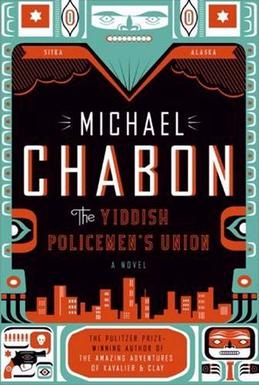
  • The Yiddish Policemen’s Union: A Novel—Michael Chabon

    I always feel a little sad upon finishing one of Michael Chabon’s novels. The Berkeley author weaves such wonderfully detailed tapestries of language and imagery that a feeling of loss is inevitable once the Big Finish has come and gone.

    That same feeling pervades The Yiddish Policemen’s Union from the jump as the world the characters have inhabited for 60 years is about to be flung on the trash heap of history. The alternative-history conceit is as follows: after the horror of World War II, and a collapse of the stillborn State of Israel, Jewish refugees were settled in an American Federal District hastily carved out of the Alaskan wilderness—and now the lease is up.

    As alcoholic policeman Meyer Landsman begins the search for who may have killed a fellow tenant of his own down-at-the-heels hotel, he heads toward the basement and this throw-away bit of narration: “[Landsman] checks behind the hot-water tanks, lashed to one another with scraps of steel like comrades in a doomed adventure.” The metaphor could be stretched to represent Landsman himself and his ex-wife/new-supervisor Bina Gelbfish who has been sent to tidy up all the loose ends at Sitka Central, and Landman’s investigation is one big throbbing nerve of a loose end.

    Drowning in the machinations of the District’s Hasidic mafia and a cold ocean of slivovitz, Landsman is haunted by a complex chess problem left by the dead tenant. Is it a clue? Is it just a reflection of his own hang-up caused by his chess champion father’s disappointment in him and resultant suicide? Chabon has explored these themes before. He revels in the arcane details of modern Judaica, and I was waiting past the 200-page mark for his patented Big Gay Character to show (he does, although posthumously).

    As Chabon has repeatedly shown—in his on-going bid to become a one-man Coen Brothers of the literary world, chewing up and spitting out genre after genre—it’s not the materials, plot points, or archetypes you start with, it’s how you play the familiar pieces that wins the game.

    Harper Perennial

    Also by this author:
    Gentleman of the Road: A Tale of Adventure