Tag: music

  • Kingdoms of the Radio: Chae Burton 1 [ficção]

    I guess every community has its own creation myths; stories that bring members together in shared tradition while allowing new people to understand in a deeper way where the group was coming from. Girassol was no different.

    My favorite one was when Charlie almost shot Zongo and Enrique as they first popped out of the forest. I had taken a little hike into the woods to pee, so I missed it, but I would have loved to see Zongo’s face; not just at seeing the property for the first time, but staring down the barrel of an automatic for the first time as well. I’m guessing.

    Charlie used to love to tell how the huge Moon we had that night had risen above the tree line behind the mansion. It was a full moon at vernal equinox and came over the house due east, throwing some spooky shadows back over the courtyard.

    He’ll probably kill me for telling you this, but Charlie was always afraid of the Menehune. Ever since he was a little kid. So, imagine the scene; it was dark, with this big full moon rising over an abandoned ranch from the 1800s and there are noises coming toward him.

    What would you do?

    Follow the story:
    Kingdoms of the Radio: Serafina’s Gift
    Kingdoms of the Radio: Charlie Perigo 1
    Kingdoms of the Radio: Zongo Kumalo 1
    Kingdoms of the Radio: Karoline Rosenda 1
    Kingdoms of the Radio: Zongo Meets The Stick
    Kingdoms of the Radio: Ride a Painted Pony
    Kingdoms of the Radio: Fadeout (Rock Hound Magazine, 1970)
    Kingdoms of the Radio: Tibetan Bells & a Bird from Hell
    Kingdoms of the Radio: Enrique Bravocado 1

    Kingdoms of the Radio: Zongo Khumalo 2
    Kingdoms of the Radio: Karoline Rosenda 2
    Kingdoms of the Radio: Enrique Bravocado 2
    Kingdoms of the Radio: Don’t Poke the Bear (Pt. 1)
    Kingdoms of the Radio: Don’t Poke the Bear (Pt. 2)
    Kingdoms of the Radio: Charlie Perigo 2
    Kingdoms of the Radio: Zongo Khumalo 3
    Kingdoms of the Radio: Charlie Perigo 3

  • Kingdoms of the Radio: Charlie Perigo 3 [ficção]

    I had been surfing the late afternoon break at Manchester, north of the lighthouse, and the sun was starting to drop behind the mountain. The great whites off the coast have been known to come in to feed when it gets dark, so I rode one last wave all the way to the beach, collected my stuff, and lashed my board to the copper’s skid.

    Chae came and met me at the edge of the dunes. I had talked her into exploring the old ranch with me and she had showed up ready to go, dressed in cutoffs and hip boots. She looked so good, I almost asked if she wanted to forget the ranch altogether.

    I mentioned once before that being alone on the Girassol property always made me feel paranoid, like I was being watched from the tree line. This particular evening was really bad. I had a serious case of chicken skin by the time as soon as I landed the chopper. I could swear I heard voices, but I wasn’t about to say anything to Chae.

    It’s embarrassing, but as a kid, I was deathly afraid of the Menehune, the race of little people who live …well, in remote forgotten places just like Girassol. I had an auntie from the Big Island who told be about them, and I never got over it. I know they’re supposed to be friendly; they were the ones who came out at night and built all the ancient temples and fishponds, but for some reason, they freaked me out. Maybe it was because they only came out at night. I never did like that story the cobbler and the elves, either.

    I know it’s wasn’t really in keeping with the whole peaceful warrior trip, but I used to keep my service piece, a Colt Commander, in the chopper just in case I got bum rushed by a wild boar or some critter out in the deep country. I grabbed the gun and began a recon of the perimeter. By this time, the sun was down and one of the fattest moons I had ever seen was rising up, casting the courtyard in an unearthly light.

    Across the clearing from the main house were the ruins of some smaller buildings, maybe worker’s quarters or something at one time. Behind that mess, was a dark tangle of green that made ’Nam look down right barren. That’s where the sound was coming from. Of course it was, right?

    I have to say; I didn’t spend a whole lot of time down in the shit, not as much as the grunts, but the whole scene that night was bringing me right back to my time in-country. I took a defensive position behind one of the collapsed walls and waited for the little fuckers to come out of the woods. To my surprise, it wasn’t Menehune at all.

    Follow the story:
    Kingdoms of the Radio: Serafina’s Gift
    Kingdoms of the Radio: Charlie Perigo 1
    Kingdoms of the Radio: Zongo Kumalo 1
    Kingdoms of the Radio: Karoline Rosenda 1
    Kingdoms of the Radio: Zongo Meets The Stick
    Kingdoms of the Radio: Ride a Painted Pony
    Kingdoms of the Radio: Fadeout (Rock Hound Magazine, 1970)
    Kingdoms of the Radio: Tibetan Bells & a Bird from Hell
    Kingdoms of the Radio: Enrique Bravocado 1

    Kingdoms of the Radio: Zongo Khumalo 2
    Kingdoms of the Radio: Karoline Rosenda 2
    Kingdoms of the Radio: Enrique Bravocado 2
    Kingdoms of the Radio: Don’t Poke the Bear (Pt. 1)
    Kingdoms of the Radio: Don’t Poke the Bear (Pt. 2)
    Kingdoms of the Radio: Charlie Perigo 2
    Kingdoms of the Radio: Zongo Khumalo 3

  • Kingdoms of the Radio: Zongo Khumalo 3 [ficção]

    It had been a couple of years since I’d been back north, but I thought I knew every place there was to know. In fact, that’s one of the things that made me want to leave in the first place.

    I had directions and a map to Garissol from Mrs. Chaves, but they didn’t really make sense. Where she had drawn the road to the old ranch, there was only a solid wall of brambles. I knew that the fuckers grew quickly in the county, but this looked like virgin territory.

    Enrique had a couple of big old machetes in the back of his bus from a harvesting job, so we decided to try and see what, if anything, was on the other side of the blackberries. We had spent so much time trying to find a road that seemed to no longer exist that the sun was starting to go down. I guess if we hadn’t still been a little wired, we probably would have waited until the next day.

    It was pretty rough going, but we did start picking up signs of an old wagon road deep in the thicket. I found it incredible to think that maybe no one had been out this way since the first cars drove up the coast. The very thought sent a chill up my spine especially since the next thought was, “Why not?”

    Follow the story:
    Kingdoms of the Radio: Serafina’s Gift
    Kingdoms of the Radio: Charlie Perigo 1
    Kingdoms of the Radio: Zongo Kumalo 1
    Kingdoms of the Radio: Karoline Rosenda 1
    Kingdoms of the Radio: Zongo Meets The Stick
    Kingdoms of the Radio: Ride a Painted Pony
    Kingdoms of the Radio: Fadeout (Rock Hound Magazine, 1970)
    Kingdoms of the Radio: Tibetan Bells & a Bird from Hell
    Kingdoms of the Radio: Enrique Bravocado 1

    Kingdoms of the Radio: Zongo Khumalo 2
    Kingdoms of the Radio: Karoline Rosenda 2
    Kingdoms of the Radio: Enrique Bravocado 2
    Kingdoms of the Radio: Don’t Poke the Bear (Pt. 1)
    Kingdoms of the Radio: Don’t Poke the Bear (Pt. 2)
    Kingdoms of the Radio: Charlie Perigo 2

  • Put on This Record: hyphenated-man—Mike Watt & the Missingmen (2010)

    To be familiar with punk rock veteran Mike Watt is to know and appreciate his idiosyncrasies, moreover, to have learned to expect him to make those left turns that light out for the territories and sometimes veer into the weeds. The thing about left turns, however, is if you make enough of them, you end up heading in the same direction that you started.

    Ever since forming the seminal ’80s punk band, the Minutemen, with his boyhood chum and dueling partner D. Boon and surfer/rhythmatist George Hurley, Watt has consistently taken the road less traveled by. The Minutemen are infamous for incorporating jazz, funk, hard core, Beat poetry—along with the kitchen sink—into their own personal strain of musical and philosophical expression. For a group that eschewed branding and easy cut-and-paste sloganeering, if it could be said that they had a motto, it was, “Punk is whatever we made it to be.”

    Watt and his various co-conspirators have always viewed punk rock as a big tent sort of affair. The whole reason this type of music and scene appealed to three dudes from San Pedro, California was its lack of inherent rules. In keeping with that spirit, Watt recorded this, his third concept album, or “opera,” in 2010. The first opus, Contemplating the Engine Room, used his father’s experience on Navy submarines as a metaphor for his own life in an Econoline van, and the second, The Secondman’s Middle Stand, mapped his near-death sickness onto Dante’s The Divine Comedy. Both of these works were very personal in nature, and in the case of the last one, perhaps a little too personal at times—but, hey, nobody said punk is supposed to make you comfortable.

    This time out, Watt enlisted guitarist Tom Watson and drummer Raul Morales, collectively called the Missingmen, to help create a cycle of 30 “little songs” that were inspired in part by the proto-surrealist paintings of Hieronymus Bosch. On his website, hootpage.com, Watt wrote that the punchy, ultra-lean tunes owe much to the Minutemen’s econo credo of “no filler, right to point, and distilled down to the bare nada.” Specifically, it was the documentary, We Jam Econo: The Story of the Minutemen, that finally got this restless artist to slow down and take a look back, allowing him to recognize something beautiful and utterly vital in the short form.

    At the virtual needle drop, the album leaps out of your speakers/ear buds with arrow-pierced-egg-man. Clocking a mere 1:19, the song is a clarion call from the pit, a diseased chunk of meat thrown over the wall to help spread the contagion. Watt’s bass is greased up and firing on all cylinders. After playing the conservative sideman with the Stooges for a few years before this—as if anything Stooge-related could be called conservative—it’s great to hear him playing, if not more aggressively, then more dynamically.

    Interestingly enough, the bass was the last piece of this particular puzzle to be added. This time out, Watt wrote on D. Boon’s Fender Telecaster, showed the Missingmen how the songs went, then retreated to later respond to what they had come up with. If he didn’t “chimp” (or “write about” in Pedro-speak) this unorthodox method, I would have never guessed that this music was anything but organically grown. It sounds like three guys jamming in a sweaty-ass shed and hollerin’ about 16th century religious art from the Netherlands. As one does.

    The tendency to play “spot the influenced influence” as is hard to resist as Watt’s music has touched so many fellow artists over the years, just as playing within an ever-widening sphere of musicians has continued to color his own work. On bird-in-the-helmet-man, I hear echoes of Albert Bouchard and early Patti Smith-infected BÖC, while belly-stabbed-man’s “gut kicked – hard / truth hits – hard / emotions gush – but no word hole” is a Pop Group Amnesty Report from the depths of hell.

    If I had to call a break-out single for “alternative” radio play (as if there were anything resembling a valid record and/or radio industry anymore) it would have to be the Trees Outside the Academy-era Thurston Mooresque hollowed-out-man with its pleasant droning melody, relentless drive, and totally fucked-up lyrics. “Now the hat that’s worn is like a horse track / pairs of peckers promenadin’ ’round a sack / a swollen bagpipe waitin’ for the ear-knife / castrate hack,” makes a perfect Sonic flip side to Sister’sTuff Gnarl, a connection made more overt when one considers the cover on Watt’s own Ball-Hog or Tugboat record.

    The song that most evokes the spirit of Pedro for me is, appropriately enough, finger-pointing-man. Here, Watt’s lyrics sound like they could have been torn from his own Spiels Of A Minuteman folio. “Conviction’s like some affliction / without the clout of some doubt / it’s fuckin’ nonsense / ignorin’ content / and letting’ the mouth just spout.

    The sharp angularity of Tom Watson’s chording juxtaposed with the singsong delivery of funnel-capped-man, brings to mind San Francisco’s own Deerhoof, in fact, the first time I saw Raul Morales play, I was reminded of the ’Hoof’s Greg Saunier—if not stylistically, through their respective jazz-inflected approaches—in the giddy zeal that they both seem to take in playing drums.

    Over the years, Watt’s vocal delivery has become more like his bass playing, a distinctive and singular expression of his muse. Printing out the hyphenated-man lyrics from the hootpage may help you find your way inside Watt’s vision, or you can just let the Missingmen’s churning accompaniment propel you headlong down their peculiar rabbit hole.

    Using one of Bosch’s less fantastical icons as an avatar, Watt lays out the impetus for the opera in own-horn-blowing-man, while keeping one eye out for any hint of lurking solipsism. “Go figure the trigger / to really holler, fuckin’ holler / and hoist yeah, foist / expression from repression / not badge-buffin’ or baggin’ wind / but to get out what’s stuck within.

  • Put on This Record: The Wörld is Yours—Motörhead [2010]

    There are three things in life you can be sure of: death, taxes, and Motörhead. When this album dropped, it felt like the Devil’s favorite band was everywhere. A documentary, Lemmy: 49% Motherf**ker, 51% Son Of A Bitch, was burning cigarette holes in the screen, and this punishing new album was shredding speakers across the globe. Lemmy Kilmister and the lads were having quite a year, unbelievably, their 35th in existence.


    The Wörld is Yours roars out of the garage with Born to Lose, as classic a Motörhead trope as speed, sex, and well… death, preferably from too much speed and sex. Drummer Mikkey Dee’s pummeling double bass footwork underscores Lemmy’s proletariat philosophical musings: Right now / right here / lose your mind / but show no fear / Burn slow / no excuse / so unkind / born to lose. How the band waited 20 albums and 35 years to write a song called Born to Lose is an utter mystery.

    Road testing this album, I kept reaching for the volume knob, turning it up by turns through I Know How to Die, Get Back in Line, and Devils in My Head until the drivers of cars I started passing on the freeway were looking kind of scared.

    Motörhead has never been a “message” band, but if they ever had a point, it is this: everything eventually fails you except rock ’n’ roll. Get Back in Line, especially, showcases just what the band does better than just about anyone else standing: an unrelenting riff, a hypersonic beat, and a bass player that’s big, pissed off, and wired out of his warty skull.

    The trio does not slow down until the fifth track in, Rock ’n’ Roll Music. For any other band, this would be a highlight and probably the hardest song on the album. That’s Motörhead’s curse, they set the bar pretty high—high enough that a boilerplate boogie about rock, just doesn’t make the cut. Maybe Kilmister, et al., were still aiming at illusive, non-existent radio play, a strategy that dogged their 1992’s outing, March or Die. I don’t come to this table, however, looking for subtlety. No worries though, the band comes slamming back with the next track, Waiting for the Snake, which paints (what else?) a fatalistic picture of the state of modern society.

    The album takes an even darker turn with Brotherhood of Man. There’s no way to describe this song other than: Heavy as Fuck. When Lemmy grunts, Now your time has come / a storm of iron in the sky / War and murder come again / lucky if you die, you damn well get off your ass and lock the front door.


    Bye Bye Bitch Bye Bye is prototypical Motörhead, and just about the most perfect album closer I can imagine. Guitarist Philip Campbell, on board since 1986’s Orgasmatron, lets loose with everything he has left, leaving your speakers smoking, and your ears ringing. The way God, or Lemmy, intended.

    RIP Ian Fraser Kilmister (1945–2015)

  • From Big Change to Big Crime in 229 Days

    In January of this year, two days after President Biden’s Farewell Address, I flipped on YouTube to catch up, having long given up on network news. The first thing I saw is what looked to be an agricultural landscape complete with a tiny tractor slowly moving under a text overlay reading BIG CHANGE in a distressed serif font.

    Ten seconds into the video, a squeal of feedback prompted the camera to reel back revealing the metal bars of a fence while the familiar tones of Old Black, Neil Young’s signature ’53 Gibson Les Paul, bashed out a three-chord stomp.

    Big Change is coming’, coming’ right home to you / Big Change is coming’ you know what you gotta do. Heraclitus himself couldn’t have put it better when he wrote in the 5th Century BCE, “Everything changes and nothing remains still,” or the more familiar, “Change is the only constant.”

    Young’s new song threw a bit of a curveball, however, when in the very next line he sang, Big Change is coming’, could be bad and it could be good. It is in this moment of leaving room for hope that I think elevates this song beyond the myopically political. Even the most news-adverse among us could feel that we were in for a tectonic season of shift.

    I’ve heard the Biden administration described as a Restoration presidency, referring to when the English monarchy was brought back in 1660, after Oliver Cromwell’s unsuccessful authoritarian stab at a Commonwealth.

    The reinstatement of a tired form of government, in England’s case, the monarchy, in our case, the gerontocracy, was a clumsy metaphor, but one must admit that it wasn’t just ol’ Joseph Robinette, God bless him, that was looking tired.

    The whole neoliberal worldview that has provided the country’s raison d’être, and slow suicide, since the 1970s, was creaking under global pressures and the weight of all the money that a new class of oligarchs had sucked up from the shrinking middle class.

    As much as I would like for Biden to have pushed through more of a progressive agenda, perhaps things just weren’t fucked up enough for that to have been an option. Like the animatronic Peter Pan says as he eternally jumps out the window into the darkness of his signature Disneyland ride, “OK, everybody, here we go!”

    Or as Uncle Neil says, Big change is coming’, could be bad, and it could be great!

    With Vladimir Putin’s Russia driving through Ukraine for a warm water port in the Black Sea and TFG threatening to seize the Panama Canal and the soon-to-be-thawed northern sea routes around Greenland, the world was looking increasingly less like a game of Risk, and more like Rock-em Sock-em Robots.

    Smash cut to Labor Day and Putin is still bombing the bejeezus out of Ukraine despite TFG having allowed the international war criminal to fly to Alaska, a place that the dotard repeatedly referred to as, “Russia,” leading some to worry that he was going to give the state back after almost 160 years.

    Israel is still systematically destroying Gaza and its people. Oh, and TFG is sending National Guard troops to American cities to do… what, exactly? This is all to admit that the tenuous hope against hope that everything “might be great,” was… let’s just go with overly optimistic.

    Seven months and change later, Big Change has been usurped by Big Crime, as desperate and close to punk rock as this soon-to-be octogenarian has ventured in a while. Don’t need no fascist rules / Don’t want no fascist schools / Don’t want soldiers walking on our streets / There’s big crime in DC at the White House!

    Why it has once again fallen to Neil Young to strap on the Gibson and man the barricades is beyond me. This should be a golden age for angry young bands, but as Donald Rumsfeld so famously said, “You go to war with the army you have.”

    I hope that when I’m 79 that I still have the gumption (and the freedom) to rail against things that I think are wrong. I also hope that if Neil gets rounded up by TFG’s masked mall-thugs, he ends up back in his native Canada, and not El Salvador, Eswatini, or South Sudan.

    The shit is hitting the fan and leave it to Shakey Deal and Old Black to sound the clarion. No more money to the fascists / The billionaire fascists / Time to blackout the system / No more great again

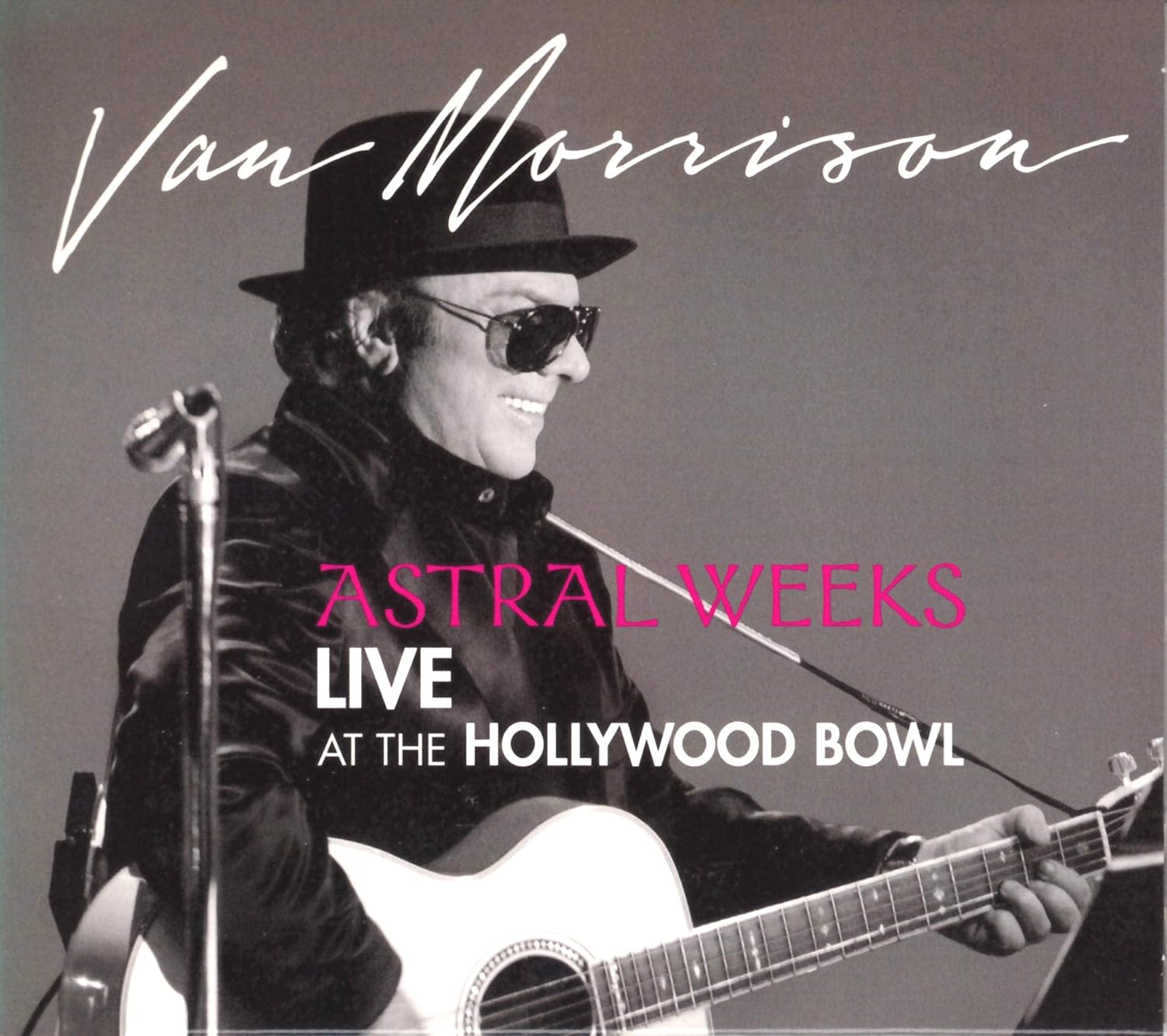
  • Happy 80th, Van the Man!


    Belfast’s beloved son Van Morrison has been a recording artist longer than I’ve been alive. Them’s first, and penultimate, album—having dropped in ’65—preceded me by a full year. This is to say that the mystic blues shouter has always been around as far as I’m concerned.

    Growing up on AM radio, Dr. Don Rose on San Francisco’s KFRC must have introduced the first Morrison classic I fell in love with, probably 1970’s Domino from His Band and the Street Choir, still one of my all-time favorite records.

    Although our childhoods were separated by a good 21 years and the Atlantic Ocean, I have to think of him as a soul brother equally steeped in Blues and R&B from our respective impressionable ages. My father used to sit me down, when he wasn’t blaring Fats Domino or Little Richard’s Specialty catalog as loud as it would go, and explain what the drummers on Count Basie and Duke Ellington’s seminal First Time! The Count Meets The Duke were doing before continuing his ongoing dissertation on Jimmy Reed’s Live at Carnegie Hall.

    As a result of what the less-enlightened among us might consider prolonged polyrhythmic brainwashing, I have often felt that perhaps I was grown in a weird sonic test tube to be a Van Morrison fan. The way that our man can stretch a phrase so that it lands off the beat like a jazz singer, or drop into a shamanic trance state to rival John Lee Hooker, it was a language I was well familiar with by the time he began to eschew the easy radio hit.

    I can still remember watching Van Morrison: The Concert on PBS late one night in 1990. I think I was half paying attention, digging the traditional Irish songs that had been on his collaboration with the Chieftains a couple of years previous. A good hour into it, the band broke into In the Garden from 1986’s No Guru, No Method, No Teacher at a frenetic pace. My first thought was that they were disrespecting the elegiac beauty of the song, a meditative highlight of the album.

    And then, with the crack of a snare drum, as suddenly as we were launched into the firmament by the upward thrust of the band, we break gravity and jettison the boosters. Van touches the seventh verse (so lightly) and then slips into a gravity-free trance, repeating, “You fell, you fell, you fell,” tasting and twisting both syllables, recasting them, rejecting them, pacing the stage like a nervous panther in a cage, and finally placing them, “from the garden.” I remember walking toward the TV, and saying out loud, “What the fuck?”

    I had seen plenty of live music by then, but I had never seen someone so enraptured by the moment, in the moment, of the moment. And who the hell is he talking about? Is he singing to mankind or speaking to the angels that were cast out of heaven? Maybe he doesn’t even know. Maybe it doesn’t even matter. It’s fucking poetry, it is.

    That song still makes me tear up every time I hear and I don’t know why. Is there a primal longing to return to the proverbial garden that Morrison tapped into? I am sure that he would just remark, as he has many times, “It’s just a song. I’m just a songwriter.” I call bullshit, but OK, I get it. The creative arts, when one is open and lucky, exist in a realm of real magic. It is best not to piss off the muse by calling it out.

    I have always respected Morrison’s high regard of the muse and his willingness to follow it wherever it might lead. The two records he produced during the COVID pandemic, and subsequent lockdown, gave his critics plenty of raw meat to devour. However, after a good 60 years in a game he, himself, has eschewed in both in song and action, I felt, and still feel, that the man has well earned the right to respond to societal events however he might feel appropriate.

    One can’t be surprised that an artist who sang the following, nearly 55 years ago, might not give a shit what anyone has to say about his business one way or another: Don’t wannna discuss it / Think it’s time for a change / You may get disgusted / Start thinkin’ that I’m strange / In that case I’ll go underground / Get some / Heavy rest / Never have to worry / About what is worst or what is best

    A re-entrenchment along the lines of Bob Dylan’s two solo folk records of 1992–93, seem to have redirected Morrison’s inspiration. 2023’s Moving on Skiffle revisited the type of music he played in his youth, before the trap and trappings of fame; whereas Accentuate the Positive, from the same year, celebrated rock & roll at it’s earliest, and least calcified, incarnation.

    This summer’s Remembering Now reads at first as an aural CV of all of the genres that Morrison has explored over the years, with familiar places and themes bubbling up in the fragrant stew. The closest cousin in the Man’s deep catalog sounds to be 1991’s Hymns to the Silence, one of my all-time favorites.

    Eighty years on, Morrison’s voice sounds as strong as ever; age bringing, if anything, a resonance that was missing in the early days. Listening back, I hear the young, brash rocker of 1965–66 as a trumpet, blasting out the theme over the roar of the band, announcing the new world as it was unrolled before it. These days, Morrison’s instrument has become a tenor sax, deep and luxurious, able to evoke longing and defiance with equal strength and intention.

    Roll me over, Romeo.

  • Kingdoms of the Radio: Enrique Bravocado 2 [ficção]

    I don’t like to fly, let me just put that out there. The day I met Zongo, I was a wreck, having just got off the flight from McKinleyville. We hit some pretty gnarly turbulence over the coastal range and I was doing my deep meditation most of the time to keep from freaking out. It would have been a real drag if I had lost it, as I was carrying enough primo seeds from Humboldt County to revolutionize the entire situation at Spy Rock.

    Can you believe that when I started helping some of the local farmers grow, they didn’t even separate out their female plants? When I started pulling out the males by their roots, they thought I’d gone loco. After that first harvest, though, they all got on board.

    Anyway, after Zongo and I did all the coke he was carrying, we were rapping and he started telling me about the Girassol property. I’d never heard of it, and I had been in the county for a few years at that point. He said that some old lady he worked for from time-to-time in the City had inherited what remained of a ranch she had actually lived on as a kid and asked him to go check on the condition of the house that was there. Seeing how we were wired to the gills, we set out to find it as soon as we left the airport parking lot.

    I was still bouncing around in my dilapidated VW bus in those days. The salt air finally killed that beast, just ended up rotting it down to the frame. It took us all afternoon to finally find what we thought was the turn off to the property.

    I immediately could see why I had never noticed it; the whole place sat behind an impenetrable thicket of blackberries with no way of knowing just how deep it was. There was no way the bus was going to make it through, so we took off on foot hacking our way through with machetes.

    Follow the story:
    Kingdoms of the Radio: Serafina’s Gift
    Kingdoms of the Radio: Charlie Perigo 1
    Kingdoms of the Radio: Zongo Kumalo 1
    Kingdoms of the Radio: Karoline Rosenda 1
    Kingdoms of the Radio: Zongo Meets The Stick
    Kingdoms of the Radio: Ride a Painted Pony
    Kingdoms of the Radio: Fadeout (Rock Hound Magazine, 1970)
    Kingdoms of the Radio: Tibetan Bells & a Bird from Hell
    Kingdoms of the Radio: Enrique Bravocado 1

    Kingdoms of the Radio: Zongo Khumalo 2
    Kingdoms of the Radio: Karoline Rosenda 2

  • The Song Mt. Tamalpais Sings—Lew Welch

    Scanning the used books over at the wonderful Book Passage in Corte Madera, I came across several faded paperbacks by Beat writer Lew Welch. One of the lesser-known Beats, Welch is probably best known as the other hopeless drunk in Jack Kerouac’s majestically depressing Big Sur.

    Flipping through his work, however, I found Welch to be a gifted poet with a value system more in line with the nascent hippie movement that was emerging in the mid-to-late-’60s. That Welch disappeared into the woods around Nevada City with his 30-30 after writing a goodbye note only adds to the mystery of this important writer I had somehow missed during my fascination with all things Beat.

    Welch’s brief, lyrical chapbook The Song Mt. Tamalpais Sings, originally published in 1969, and reprinted with three additional poems by Berkeley’s Sand Dollar in 1970, features a stunning wrap-around scratch board illustration of the Marin Headlands with a slightly more provincial San Francisco peeking (peaking?) over the hills.

    The title poem, the first in a pair of bookends that feature the mountain, intones the mantra: This is the last Place. There is nowhere else to go, as Welch boils down the western movement of humankind. Centuries and hordes of us, from every quarter of the earth, now piling up, and each wave going back to get some more. Buddy, you have no idea.

    The last poem, Song of the Turkey Buzzard, looks deeper into a riddle posed in a triptych of Zen-like koans (complete with commentary by Welsh’s literary alter−ego, the Red Monk): If you spend as much time on the Mountain as you should, She will always give you a Sentient Being to ride… What do you ride? (There is one right answer for every person, and only that person can really know what it is)

    Of course Welch, like anyone would, wishes for a cool totem animal like a mountain lion, but the mountain has other ideas: Praises, Tamalpais, Perfect in Wisdom and Beauty, She of the Wheeling Birds. Throughout the course of the poem, the mountain throws some pretty clear hints at him until in the second canto, he finally acquiesces, and given his final act two scant years later, it begs one to wonder if he hadn’t been planning it all along.

    With proper ceremony disembowel what I no longer need, that it might more quickly rot and tempt my new form NOT THE BRONZE CASKET BUT THE BRAZEN WING SOARING FOREVER ABOVE THEE O PERFECT O SWEETEST WATER O GLORIOUS WHEELING BIRD

    Sand Dollar

  • Kingdoms of the Radio: Zongo Khumalo 2 [ficção]

    I met Bravo as soon as I hit ground. We did up the last of my Colombian marching powder and I caught a ride with him up to Mrs. Chaves’ property. The Mendo coast was different in those days. A lot slower, if you can imagine. I think there may have been one stoplight on the whole trip.

    The bottom had long fallen out of the timber and cattle businesses and tourists, although around, weren’t everywhere. A couple of freaks in a busted-up VW van could still draw looks when we cruised through town.

    Bravo had been working on some of the remaining ranches as kind of an indentured servant, which suited him quite well. He told me that he had been a high school English teacher in the Bay Area, and couldn’t deal with seeing his former kids coming back from Vietnam in boxes, so he dropped out. He liked the repetition and the anonymity of working the fields. He also was stoked to be in the best shape of his life.

    Some of the established farms had started supplementing their income by growing the crazy weed, and my man was quite the expert, having lived up in Humboldt County. I was glad to hear that I would at least be able to find some smoke on the Garcia, as that was one of the factors that originally drove me to move to San Francisco.

    Part of me was glad that the rest of it was going to be hard if not impossible to get my hands on. As I had time to process the incident on Broadway, I could see that I had been getting pretty far out there.
    One good thing about being back in the Triangle was the utter lack of giant talking neon signs.

    Follow the story:
    Kingdoms of the Radio: Serafina’s Gift
    Kingdoms of the Radio: Charlie Perigo 1
    Kingdoms of the Radio: Zongo Kumalo 1
    Kingdoms of the Radio: Karoline Rosenda 1
    Kingdoms of the Radio: Zongo Meets The Stick
    Kingdoms of the Radio: Ride a Painted Pony
    Kingdoms of the Radio: Fadeout (Rock Hound Magazine, 1970)
    Kingdoms of the Radio: Tibetan Bells & a Bird from Hell
    Kingdoms of the Radio: Enrique Bravocado 1