Tag: music

  • Kingdoms of the Radio: Fadeout (Rock Hound Magazine, 1970) [ficção]

    Hindsight is always a cold-hearted bitch. Lucious Cole was a head case. Anyone who had to personally deal with him—whether his ex-band mates who threw him to the curb, or this writer, who once was caught in his maelstrom for a lost weekend in San Francisco—could attest to his mercurial nature.

    Lucious Cole was also a genius. Perhaps it took a seriously damaged personality to fully capture the zeitgeist of our troubled times. Cole’s new—and sadly ironically titled—album, A-OK, does just that.

    Starting the album with the slow, meditative lope of Hold Me Down, Cole’s trademark rock solid rhythm guitar anchors his plaintive vocal to the Earth. It’s easy to read too much into Cole’s entreating Come with me / Hold me down / I feel like I’m losing my grip / On the ground; but the entirety of Cole’s later output, from the National Loaf’s Cut the Loaf on, could be read as a cry for help, albeit, a consistently tuneful one.

    A weary resignation has crept into Cole’s consciousness by the title track where a swirling guitar figure underscores an exhausted soul coming to terms with leaving all his worldly possessions in the care of others. I’m glad that you still care / About all the thousand things / That I can no longer bear.

    A radio-friendly jangle of acoustic guitars announces the freedom that Cole has found in letting go in Clear Skies. Ex-National Loaf drummer Chas “Chalky” Woodrow provides his trademark skittering background as if trying to escape the session before being caught up once again in Cole’s drama.

    Should we infer anything by whatever olive branch brought his contentious former band mate back into Cole’s creative circle? Was Cole making amends, intuiting that time was short, or did he just need a damn good drummer to propel the obvious breakout single?

    Whatever peace Cole found in rekindling an old friendship has clearly eroded by the arrival of the tense and jittery Sliding Away [From It All]. Chalky reprises his rhythm work on this track, laying down a solid foundation for Cole’s precarious emotional house of cards, while a trio of background gospel singers try to provide a modicum of tranquility behind the singer’s fragile vocal. Woodrow has since talked about the A-OK sessions as a drug-fueled Boschian nightmare, which would explain Cole’s clipped and manic avian-sounding chirps leading into the fadeout.

    By the time A-OK hits mid-point, the album has eased into its horse latitudes, a calming tropic of mid-tempo song craft that would stand out as a handful of highlights on a lesser artist’s record. Cole, however, is merely lulling the unsuspecting listener into a false sense of security.

    Our man suddenly kicks the speakers wide open with Power Games, a ferocious slab of pure, uncut funk, that could have established him as a viable photo-negative answer to James Brown himself. This writer, for one, would have loved to see Lucious Cole live long enough to have blown some minds and moved some asses on the new Soul Train television show.

    Perhaps A-OK’s most beguiling, and hauntingly beautiful, song is the closing track. Named after a mythical kingdom in ancient Buddhist and Hindu lore, Shambhala has come to generally refer to a spiritually pure place where wizened “sun worshippers” live out their long lives in bliss.

    One can hear the primal yearning for such a place in Cole’s impassioned delivery behind a soaring orchestration incorporating exotic instrumentation from the Far East. It’s a shame he never found what he was looking for.

    Grade: Five bones

    Follow the story:
    Kingdoms of the Radio: Serafina’s Gift
    Kingdoms of the Radio: Charlie Perigo 1
    Kingdoms of the Radio: Zongo Kumalo 1
    Kingdoms of the Radio: Karoline Rosenda 1
    Kingdoms of the Radio: Zongo Meets The Stick
    Kingdoms of the Radio: Ride a Painted Pony
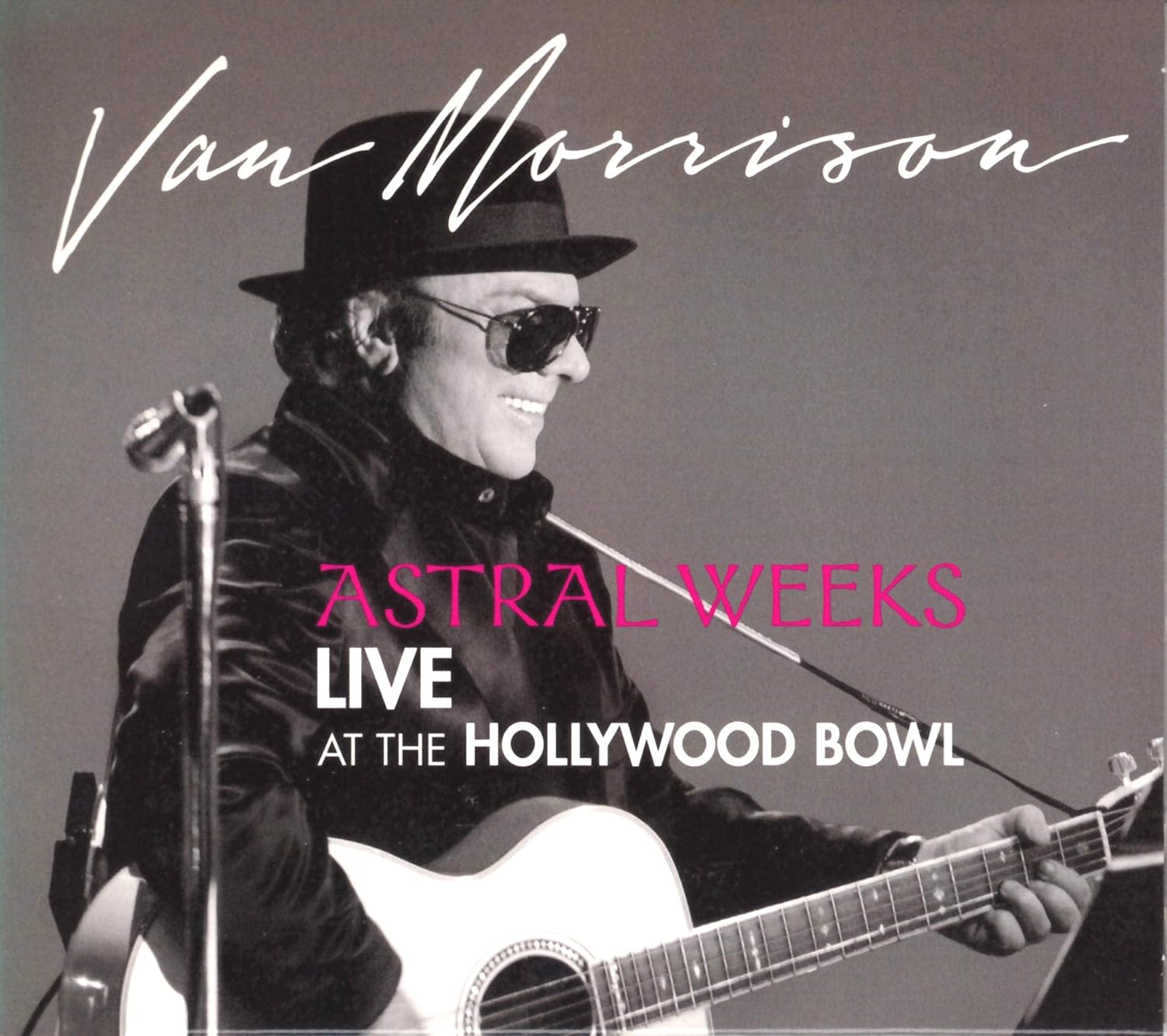
  • Put on This Record: Astral Weeks Live at the Hollywood Bowl—Van Morrison [2009]

    On the list of things I never thought I’d see (or hear), Van Morrison revisiting his seminal 1968 album, Astral Weeks, has lived at the top of the leaderboard for more years than I’d care to count.

    Over the years, the Man has developed a thick-skinned persona that holds stardom and the chasing of an easy buck at a disdainful arm’s length. He is not going to be your trained monkey, no matter how badly you might want it. You want another Moondance? Bollocks. I wouldn’t presume to ask Morrison to look backward any more than I’d ask for his autograph while getting ice cream at Fusco’s.

    However, a closer read of his journey reveals threads that tie disparate pieces of his career together, an ever-present turning toward certain tropes: the streets of Belfast, the green hills and mountain streams of an Irish dream state, a town called Paradise; it all weaves together to create one of the richest imaginary tapestries of any artist living or dead.

    Morrison has said he has always wanted to properly record this group of songs with a string section—the way he heard it in his head back in ’68. Right off the top, the violin prominently featured on the lead track, Astral Weeks, adds to the sonorous gravitas of the original.

    The master’s voice has deepened with age and has taken on more of the characteristics of a band instrument—at times honking like a tenor sax, at others, vibrating and humming low like a cello cradled between the legs of a ginger lass, or more appropriately, an aging Dublin transvestite.

    Which leads me to the most striking difference between the original album and the new performance: the sequence. Morrison has shifted around the order of songs, which fits the dream-like nature of the record. Astral Weeks always struck me as ephemeral, the more you tried to grab it on to it and put it in a box, the more likely it was to turn to smoke.

    To me, the two final songs after Madame George always felt like a coda, or a post-coital afterglow. In any case, coming right after such a masterful vision of humanity at its most exposed and fragile, they weren’t exactly in the best light to be recognized as the subtle masterpieces that they are.

    Slim Slow Slider and Ballerina are recast here as shamanistic trance state-inducing chants guiding the listener toward the heavy hitters of Sweet Thing and Madame George respectively and the state of bliss that Astral Weeks always promised.

    I’m not going to ruin the surprise of all of the little tweaks and changes that Morrison has made to these songs. The hungry 22-year-old singer-songwriter had become a 62-year-old veteran by this time, and some perspective was bound to creep in.

    Half the fun of diving into the updated versions is comparing them to old mental tapes earned from spinning the original record hundreds, or possibly thousands, of times over the years.

    It’s rare for an artist to fully grasp what a particular work means to its admirers—to be able to put his or herself outside a personal memory of the process and see what others see, hear what others hear. I’ve read interviews in which Morrison claimed to not know where these songs came from, and listening to these fresh interpretations, I tend to believe him.

  • The Prince is Dead, Long Live the Prince (of Darkness)

    John “Ozzy” Osbourne made quite a career out of the moniker, “Prince of Darkness.” The guy knew a good hook when he saw (or heard) one, but he was more than that to a few generations of fans now. Ozzy was a hero to every misfit who struggled to find their place in this crazy world. He was—and I mean this with all due respect, and today, a broken heart—he undisputed King of Fuckups.

    Anyone who has read his 2011 autobiography, I Am Ozzy, knows that the man should have died about a dozen times before Black Sabbath even started, that he wasn’t killed seems to imply some sort of preternatural intervention. It’s not our place to guess the intention of powers beyond our understanding, but I am glad it seemed to work in our favor.

    I first heard Black Sabbath on a purloined 8-track compilation, We Sold Our Soul For Rock ‘N’ Roll. I don’t remember who stole it or how it came into my possession, but, in retrospect, it’s only fitting that this gateway drug appeared by illicit means.

    Ozzy’s plaintive wail of, Oh, no! Please God help me! in the titular track makes the hair on the back of my neck stand up to this day even though I’ve heard it easily thousands of times. This was a guy in serious trouble, perhaps at the end of a road that started with possession of hot merchandise before leading to… to what? I had to know!

    The second song on that collection, The Wizard, follows the track order on the band’s first album and allows a small slice of light to cut through the incessant Birmingham cloud cover. Maybe the wizard will make everything all right after all. Nope.

    It’s the third track that sealed my fate as an Ozzy fan for nearly 50 years. Skipping the needle ahead past an iconic suite of jazz-inflected proto-metal from the Black Sabbath album, Warning, comes as, well… a warning, but like in one of those Japanese horror films, if you’ve heard it, it’s too fucking late for you.

    The crazy thing is, Warning is not even a Black Sabbath song, it’s a cover of a 1967 single by The Aynsley Dunbar Retaliation. The what now, you ask? And you would be right. At the time, Dunbar was hot from drumming on John Mayall’s Bluesbreakers’ A Hard Road, which featured, wait for it, future Fleetwood Mac instigator Peter Green. I swear, were there like twenty people left in England in the ’60s?

    Somehow Sabbath takes this throwaway 45 and turns it into a signature statement of intent. Geezer Butler’s bass announces the proceedings before Ozzy sets the scene:

    Now the first day that I met ya / I was looking in the sky / When the sun turned all a blur / And the thunderclouds rolled by

    And then it gets worse for our man, Oz:

    The sea began to shiver / And the wind began to moan / It must’ve been a sign for me / To leave you well alone

    I have yet to find the right vocabulary to explain what it is in Ozzy’s delivery of the word, “shiver,” but there is a realness to it. Even though he didn’t write the song, he saw that shit. You can’t convince me that he wasn’t drawing on some experience of being out there in that moaning wind, metaphorically, or not.

    The short chorus comes up fast with Ozzy lamenting:

    I was born without you, baby / But my feelings were a little bit too strong

    It’s the way he hits the word “strong” that kills me, because it is not. It is anything but, it may not even be in key, and yet it somehow incorporates all the pain and frustration of the outsider. It is not a howl against the void, but more like a capitulation with the dark.

    After a serious masterclass in band dynamics, Ozzy crawls his way back to the mic:


    Now the whole wide world is movin’ / ‘Cause there’s iron in my heart / I just can’t keep from cryin’ / ‘Cause you say we’ve got to part / Sorrow grips my voice as I stand here all alone…

    Game over. Fucking sorrow has gripped his voice, man! Has there ever been a more legitimate take on the word? Billie Holiday may have delivered one, but her voice, even at its most vulnerable, was beautiful. Ozzy’s delivery is tantamount to crying ugly.

    I remained a devoted fan through his being sacked by Sabbath and I reveled in his jaw-dropping rebirth with Randy Rhoads, Bob Daisley, and Lee Kerslake [say their names], and beyond. I have to admit that I harbored a few misguided proprietary feelings toward our man when he became a reality show until I realized that there was enough Ozzy for everyone. Until today when there wasn’t.

    If anyone has ever earned a rest, it’s Ozzy. I don’t know what else to say. There’s iron in my heart.

  • Genesis Angels: The Saga of Lew Welch & the Beat Generation—Aram Saroyan

    At the behest of poet Ted Berrigan, a young Aram Saroyan interviewed a becalmed and nearly forgotten Jack Kerouac in 1967 for the Paris Review. Saroyan describes this meeting much later in an article for The Poetry Foundation. It is a watershed moment, one generation testing the next, and Saroyan walks away with Jack’s benediction, “You’ll do, Saroyan.”

    I doubt that Kerouac had in mind for the young writer to go forth and pen the History of the Beats, but 12 years later, Saroyan attempted just that. Perhaps the tired Kerouac recognized a comrade-in-arms, as Saroyan’s sensibilities would have fit right in with the tea-loving, electrified wordslingers of the past. His official biography for his collected papers at the University of Connecticut Libraries reads, “In the late 1960s Saroyan experimented with marijuana and began to develop a career as a poet.” Sounds about right; let’s go!

    Genesis Angels is no straight-ahead biography, but a long prose poem in its own right. Saroyan attempts to capture the feeling of the era, the mad rush toward an uncertain future and away from a stifling mid-century American mindset that had all but disappeared by the time he started his journey.

    Saroyan identifies the Eisenhower years with the monster movies that were throwing their own existential warnings up on the screens of the ’50s and early ’60s. “We were being condemned to endure a complete rescheduling of human experience: our routines no longer in any relation to the planet or the landscape or our neighbors. We had willingly locked ourselves up with comfort and convenience and suffered an immediate transformation. It was we ourselves who had become The Thing, The Blob, inside our private Houses of Wax.”

    The degree that Saroyan is successful in capturing the Beat gestalt, from the far remove of 1979, depends on how susceptible you are to that particular brand of amphetamine-driven patter. Me? I can’t get enough.

    On Jack Kerouac meeting Neal Cassidy: “Now this is where it did combust because what happened was Jack saw Neal and listened to his wild, never-get-a-word-in-edgewise, spontaneous patte… this man was a rapid, word chasing man chasing word chasing man chasing time chasing space—lookout! just like his driving—saved by exposure and the rare posture of ecstatic brotherhood.”

    On Allen Ginsburg: “Allen had the conceptual center of the universe in his belly and breath… so that then he could inhale and exhale planets, and snow storms, windows, and paper towels, Mickey Mouse and Hollywood, tits, and cocks, ambushes, and semesters, toothbrushes, and Coca-Cola—the whole litterbug earth with Indians and business man and women giving birth, inside his nature, and available.”

    Strangely absent from this cluttered stage is Welch himself. Whether outshined by the titanic personalities around him, or just a quiet guy whose poems did the speaking for him, I didn’t come away with any better sense of the man than when I started. This isn’t a deficit in research; the University of Connecticut’s Saroyan collection contains a recorded interview with Welch and David Meltzer from 1969, and Saroyan himself interviewed poet Joanne Kryger about Welch in 1977, presumably while doing research for the book.

    Perhaps the problem is that—like a total eclipse, or some other natural rarity—Welch began disappearing as soon as he appeared. You have to catch these things when they happen or you’re out of luck. Until next time.

    Saroyan best captures Welch’s spirit in a few throw away lines describing the importance of becoming a poet:

    Be a poet and save the world forever.
    And don’t forget to take a sweater.
    Put this flower in the peanut bottle with some cold water.
    It’ll be here when you get home.
    That’s the way the universe works.

  • Put on This Record: Funland—Unknown Instructors [2009]

    Shakespeare had it right. You really can’t trust anyone that doesn’t appreciate music. All of our greatest thinkers eventually seem to come to the conclusion that we are only vibrations in the great void. Call it the Big Bang Theory, call it what you will, but how could one go through life closed to the most primal and necessary form of human expression?

    Into the late spring of our discontent, like a silver dollar dropped down an outhouse shitter, the third, and most cohesive, album from Unknown Instructors—an unlikely supergroup of sorts—could just be the vital blast of L.A. punk you didn’t know the situation was calling for.

    On Funland, the planet’s premier punk rock rhythm section of Mike Watt and George Hurley consistently push each other in more and more complex jams supported by Saccharine Trust guitarist Joe Baiza playing at his most insectoid. Whereas Hurley played pretty straight-ahead on the previous album, producers Baiza, Joe Carducci, and Dan McGuire saved the most Rashied Ali-inspired grooves for its follow up.

    Recorded at the same time as 2006’s The Master’s Voice, Funland is no mere collection of second-rate tracks, but a cohesive work of art that follows a thematic surge. Of course, that theme is loose enough to include Pere Ubu’s père David Thomas (R.I.P.) wailing as if existentially wounded on Afternoon Spent at the Bar, Sunny; while elsewhere, poet Dan McGuire reprises his role as a modern-day Jim Morrison with a real penchant for language rather than just a vehicle for getting more whisky and leather pants.

    McGuire has an eye for the details of the less-than bucolic childhood that many of us aging suburban California kids can relate to. He remembers the forgotten places, the weed-strewn empty lots, and trampled-down hurricane fences, but he’s not the only poet on deck.

    Whereas Voice was a hard-charger right out of the gate with the swirling Swarm, the opening salvo on Funland is Maji Yabai—Japanese slang originally meaning something like, “Oh, shit,” and morphing in recent years into something like “sick” or “bad,” but in a good way—an introspective Watt-spiel.

    This paints the scene in a peculiar midway twilight. The unmerciful heat of the summer sun has finally abated and that belly full of PBR and corndogs isn’t going to hold you. It’s time to make some decisions. As the buzz threatens to loosen its grip, you can opt to reinforce with another semi-cold one, or pop out to the car for something stronger.

    Funland’s hard stuff includes a cover of Captain Beefheart and the Magic Band’s Frownland, welding its odd gravitas to the album’s own weird sense of bacchanalian carny freedom. In addition to Thomas’s unique contributions, artist Raymond Pettibon’s unexpected jazz-influenced rap on Lead! proves that his take on Voice’s Twing-Twang wasn’t just an anomalous laugh.

    Pettibon has a surprisingly direct and, dare I say it, swinging delivery that may just cause me to rethink my idea of him as a quiet, misanthropic artist; or someone you might meet working the ring toss. It’s good to remember not to confuse the artist with his art.

    Funland is all about pushing the boundaries of what you think you know about these musicians, and like the famous Tilt-A-Whirl, if you don’t hurl, you just might have the time of your life.

  • Put on This Record: Blows Against the Empire—Paul Kantner and Jefferson Starship [1970]

    Credited to Paul Kantner and Jefferson Starship before there was such a thing, Blows Against the Empire remains one of my all-time favorite albums, the centerpiece to the Planet Earth Rock ’n’ Roll Orchestra (PERRO) experience, itself a loose (very loose) confederation of Bay Area musicians that cross-pollinated David Crosby’s masterful If I Could Only Remember My Name, as well as Grateful Dead guitarist Jerry Garcia’s first solo project, Garcia, the first eponymous Graham Nash/David Crosby record, and Nash’s own Songs for Beginners.

    If that heady company doesn’t given you an idea of what’s going on here, Kantner provides some insightful notes along with the 2005 remastered Legacy release. By the end of the ’60s, Kantner’s band Jefferson Airplane had begun to come apart at the seams. After recording their seminal album, Volunteers, in 1969 and watching as the hippie dream was beaten to death with pool cues by the Hells Angels at Altamont, the center could not hold.

    Jorma Kaukonen and Jack Casady had recently become more interested in their side project, Hot Tuna, and Marty Balin, perhaps tired of being arrested and/or punched in the head for a while, had disappeared—leaving Kantner to indulge his space fantasies at Wally Heider’s Studio in San Francisco’s Tenderloin district. That’s where the story gets interesting.

    Kantner soon enlisted Grace Slick to help him sketch out some demos for the next Airplane album. According to Kantner’s notes, Slick had been really influenced by the playing of pianofighter-for-hire Nicky Hopkins on Volunteers. Slick’s rhythmic and dramatic grand piano work on Blows Against the Empire help to give the album a cohesive, timeless feel.

    Also wandering in and out of Heider’s at the time were various members of CSN, the Grateful Dead, Quicksilver Messenger Service, and Santana, as well as Jorma’s brother Peter Kaukonen, and Electric Flag bassist Harvey Brooks. Casady later joined the ad-hock group and added his heavier-than-God bass playing (most notably to Slick’s vocal tour de force, Sunrise).

    The new remastering job sounds fantastic, but beware: there is a very disappointing glitch four minutes into the first track, Mau Mau (Amerikon). I have to admit it took listening to the whole album three times in a row to notice it. The upside is that the record sounds so good that I was inspired to listen to it three times in row. Kantner’s dense lyrics helped hide the problem, as I often find myself drifting and riding the groove rather than hanging on every word. It’s a shame that an obnoxious digital goof mars such a great work of art.

    The good news is the bonus tracks help make it well worth upgrading your copy. The “original” version of Let’s Go Together has been restored to the running order whereas the alternate version that had been strangely slipped into the first CD offering is now a bonus track. Kanter’s question “Shall I go off and away to South America? / Shall I put out in my ships to the sea?” owe more to Crosby, Stills, and Kantner’s original vision of escape captured in the Airplane/CSN song, Wooden Ships, and it makes more sense in context of Kantner’s space opera for him to ask “Shall I go off and away to bright Andromeda?”

    Slick’s acoustic demo of Sunrise proves that it is her amazing voice and not the myriad of overdubs that bring on the chills whenever I hear that song. SFX is Garcia and Mickey Hart goofing with musique concrete in much the same way as what became X-M on the album and Spidergawd on Garcia.

    The final track is a live version of Starship from the Fillmore West later that year, although it sounds like latter-day Airplane, the notes don’t reveal what confederation is responsible. The Airplane would drift back together the next year for the uneven but shamefully out-of-print Bark, and hold together for one last primal hurrah, Long John Silver in 1972.

    To paraphrase Hunter S. Thompson, this is the high water mark where the crest of a beautiful wave broke and began to roll back.

    Go to the forest and move.

  • Put on This Record: Another Side of Bob Dylan—Bob Dylan [1964]

    I was 11 years old in 1977 and while punk was exploding elsewhere, I was in a backwater of the San Francisco Bay Area discovering Bob Dylan. My best friend’s dad was an ex-folkie with a guitar and a great collection of vinyl. Whereas my dad still loved and played Little Richard, Fats Domino, and Ray Charles at full volume (at all hours), to enter the neighbors’ house was to glean a small residual bit of the magic and late-night menace of New York and Greenwich Village. Red wine. Mysterious women of Gypsy origin. Bob Dylan.

    I seem to remember the gateway drug for us was Blonde on Blonde with its classic leadoff track Rainy Day Women #12 & 35, but like Bob himself said, we “started out on burgundy, but soon hit the harder stuff.” We were kids raised on AM rock radio, and as such, we understood Dylan after 1965. The classics were still in heavy rotation: Hendrix transforming All Along the Watchtower, The Byrds chiming about Mr. Tambourine Man, Dylan himself spitting out Like a Rolling Stone.

    It was the earlier records that were a revelation.

    The tracks on 1963’s The Freewheelin’ Bob Dylan painted a picture of that world we had only guessed at. Talkin’ World War III Blues introduced us to a world of Cold War paranoia filtered through Woody Guthrie, while Corrina, Corrina reached back to a deep well of traditional music that, even then, we sensed was the secret current; the hidden aquifer of American culture.

    The Times They Are a-Changin’ was a little intense for a couple of suburban kids. It would be a few years before we understood the power in Ballad of Hollis Brown and The Lonesome Death of Hattie Carroll; even the face staring out in disdainful sepia was off-putting. At the bottom of the pile, however, was a simple black and white cover with a photo that seemed almost like an afterthought. It showed a quite different person than the disapproving fundamentalist folkie from the year previous. This guy seemed to be comfortable in his own skin. This guy was cool.

    When the needle hit the first track, we knew something else was going on here. The Jimmy Rodgers yodel in All I Really Want to Do, along with the song’s platonic admonishments showed a fun side of Dylan that we had missed wading through the heavy hitters. Sure, Rainy Day Women had been fun, but to a 11-year-old, even a serious one, Sad Eyed Lady of the Lowlands was decidedly not.

    Spanish Harlem Incident laid out the bohemian mise-en-scène we had imagined was out there, but hadn’t yet experienced roaming our backyard kingdoms; but the track that totally captured out imaginations and ensured that we both would be life-long fanatics, was Motorpsycho Nitemare. Dylan’s ability to set a scene and tell a story was, and remains, unparalleled.

    For years, we called each other “unpatriotic rotten doctor commie rats.” Good times.

  • Life—Keith Richards

    Whether or not you will be captivated by Rolling Stones guitarist and all-around bon vivant Keith Richards’ autobiography all the way to the end of its 547 pages swings on a couple of factors.

    Number one: How much do you still like and care about the Rolling Stones?

    Number two: How much you can stomach reading about the sordid intricacies of heroin addiction?

    If those two caveats check out, then this book has a lot to offer in the way of insightful musings on the emergence, “maturation,” and decline of rock ’n’ roll, as well as dispatches from the gutter as harrowing as anything William S. Burroughs phlegmatically coughed up in junk-sick reverie.

    Occasional partner-in-crime Tom Waits puts it best towards the end of the book when he describes Richards as “a frying pan made from one piece of metal. He can heat it up really high and it won’t crack, it just changes color.” Spiritually changing his color from pasty postwar English white to the richer tones of the blues artists he and his friends immortalized became an obsession early on, and one that somehow, against all odds, he managed to pull off.

    Richards recalls fondly of being accepted on the “other side of the tracks” much more openly than in the “Whites Only” areas of the still-segregated American South. Richards writes in his journal about coming to the United States for the first time, “Finally I’m in my element! An incredible band is wailing… so does the sweat and the ribs cooking out back. The only thing that makes me stand out is that I’m white! Wonderfully, no one notices this aberration. I am accepted. I’m made to feel so warm. I am in heaven!”

    This ability to fit in wherever he finds himself belies a truthfully warm and open heart on the part of a young Keith Richards. You never get the sense that this English kid is culture slumming, he has done his homework, paid his dues, and remains respectful and—as an outsider in an uptight society still struggling to shrug off the ’50s—simpatico. At least until the drugs kick in.

    Later in the narrative, Richards bemoans the way that the other half of his musical partnership has become too enamored with controlling all aspects of the now multi-million dollar business interest called the Rolling Stones. This is after spending most of the ’70s in a narcotic fog, forcing his band mates to practice, record, and exist on “Keith time.” He doesn’t seem to realize that he has passive-aggressively set the agenda for years by placing himself outside of the “normal” constrains of time, laws (local, Federal, and international), sleep, etc.

    What saves this tale from being just another tale of debauched rock royalty (not that there’s anything wrong with those) is Richards’ voice. Life is written very much in Keef’s voice, along with reeling asides, obscure English slang, and most of all, heart. As much as they squabble and moan about each other, the Rolling Stones have been tempered by a half-century of dealing with each other’s shit.

    Richards explains, “Mick and I may not be friends—too much wear and tear for that—but we’re the closest of brothers, and that can’t be severed… Best friends are best friends. But brothers fight… At the same time, nobody else can say anything against Mick that I can hear. I’ll slit their throat.” Judging from his track record, and the sticker in his boot, he may end up doing just that.

  • When That Rough God Goes Riding: Listening to Van Morrison—Greil Marcus

    Funnily enough, considering the subject and theme of this book, reading übercritic Greil Marcus is a lot like listening to Van Morrison. The experience can be illuminating, frustrating, transcendent, and solipsistic—often in the same paragraph or song.

    Like Morrison, Marcus has been following his own path for quite some time, and anyone who has a passing familiarity with either of them will always be able to find the gold hidden down a backstreet or way up top a flight of fancy.

    My struggle with Marcus is that his exhortations can be the definition of pedantic, referencing far-flung obscure artists and works in order to make a point that no one can truly argue with, having no idea who or what he’s is talking about.

    On the other hand, like listening to Morrison himself, if you’re willing to put in the work, you can be turned on to artists, books, movies, etc. that may later become indispensable to your life. What Marcus does here is doubly off-putting, as he spends a great deal of time extolling the virtues of tracks and performances of Morrison’s that are unavailable anywhere but bootlegs, a stream that Morrison spends a great deal of energy to dam, enlisting the services of Web Sheriff to scour the internet of any traces of illicit music.

    I was lucky enough to have a copy of the 1971 KSAN Pacific High Studios show which is referenced pretty heavily, but as far as Caledonia Soul Music, which according to Marcus is the key to the whole thing, I’ll just have to take his word for it.

    In this book, Marcus eschews most biographical information, much, I can imagine to Morrison’s relief, only pointing out pertinent signposts along the way. The whole focus is on those moments of unforced transcendence that Marcus believes paint a secret map through the jungle of Morrison’s work. As with any great artist—and to put my cards on the table, I believe Morrison to be one of the greatest singers of the last 40 years—what pieces resonate with your soul at any given time is completely subjective.

    I think Marcus is either trying to be cute, or is just being lazy to discount in one fell swoop everything Morrison put out between Common One in 1980, and Tell Me Something in 1996. Marcus talks about looking for the “yarragh” in Morrison’s performances, that moment that transcends language and artifice to, as Morrison once sang, “get down to the real soul, I mean the real soul, people.”

    To take a page from Marcus’ book if I may refer to a performance now out-of-print and unavailable, as a child of the ’70s I knew Morrison primarily as an AM radio hit maker and it wasn’t until PBS ran Van Morrison The Concert, recorded at New York’s Beacon Theater in 1989, that I was exposed to Morrison the mystic.

    I don’t recall which number he used to launch himself into the “yarragh,” but all of a sudden, he was growling and barking, not like a madman, but like a genius. I remember standing in front of the TV just slack-jawed; this was someone who warranted further investigation. All of a sudden I understood why someone like Morrison would rankle against cheap stardom. It wasn’t the fucking point. This, this is the point. And although Marcus’ examples are personal to his own experience, as far as catching the desperately vital point of it all, we really do see eye-to-eye.

    PublicAffairs