Tag: review

  • 57–56 to 60: The Last Days of May

    30–31.05.2026

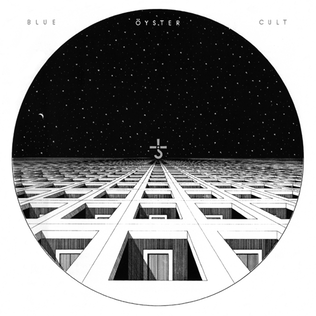
    Every year at this time, I have to pull out the old Blue Öyster Cult records and celebrate. Then Came The Last Days of May is the easily the most haunting song on probably the eeriest rock album ever made. BÖC’s portrayal of a true-life trio of young men who were shot in a drug deal gone bad out in the Arizona desert presages Breaking Bad by three and a half decades. The cautionary tale is the set piece around which the rest of the songs on the band’s eponymously-named album revolve—like planets around a cold, dead star.

    The song chillingly relates the ride to pick up “the stuff,” as well as the anticipation the boys feel as they imagine spending the money they are about to make. Lead guitarist Donald “Buck Dharma” Roeser paints a stark, yet bucolic scene—much like the band itself—heavy with understated menace.

    Sky’s bright, the traffic light / Now and then a truck
    And they hadn’t seen a cop around all day / (What luck)

    When performing my favorite version of the tune (so far) on 1975’s live album, On Your Feet or On Your Knees, Buck drops the bit in parenthesis, leading one to wonder what would have happened if a cop had been around. Of course, as soon as the driver gets far enough out of town, the car pulls over and the trio is shot and left for dead.

    It wasn’t until the car suddenly stopped / In the middle of a cold and barren plain
    And the other guy turned and spilled / Three boys blood, did they know a trap had been laid?

    I figure I must have been around 13 when I finally got around to buying the band’s first album. I had all ready memorized every note of 1978’s Some Enchanted Evening, and of course, 1976’s Agents of Fortune was an 8-track* that you had to have in the ’70s. It was the law. As beautifully odd and varied as that collection is, nothing prepared me for the rarefied atmosphere of the first three, what us fans refer to as the “black and white” albums.

    Forsaking any pictures of the band, 1972’s Blue Öyster Cult, and Tyranny and Mutation from the next year, featured stark graphic illustrations by a mysterious artist listed only as “Gawlik” which only added to the group’s mystique. Secret Treaties from ’74 did have a pencil drawing of some cagey cretins who had apparently got their hands on a Messerschmitt Me 262.

    Who knew where they got one of those planes nearly 20 years since the last one took to the air? If I had to guess, it was from the dude with the cape and the German Shepherds. Who shot the dogs as we see on the back cover, and why? Are they in Argentina? What the hell is going on here?

    Something about the stark, yet somehow still murky recording of the first few records fits the material so perfectly. Think of R.E.M.’s Murmur, if everything was easily decipherable, would it be half as fun? Something to think about as modern artists use Auto-Tune and AI to build perfect yet soulless music.

    It’s pretty incredible that the band that fired up my young imagination are still out there doing it. They may have lost some members along the way, but the oyster boys can still deliver (hear them chatter on the tide).

    This music always makes me think of the friends I’ve lost along the way and the great times we had listening to this uncanny band. I had always interpreted the last lines of The Last Days as one of the wounded boys making peace with joining his friends soon, and given Dharma’s propensity for lyrical fatalism that would find full flower with Don’t Fear the Reaper, I can’t be too far off.

    They’re OK the last days of May / I’ll be breathin’ dry air
    I’m leaving soon / The others are already there
    You wouldn’t be interested in coming along / Instead of staying here?
    It’s said the West is nice this time of year

    *Ask your grandparents

  • Kingdoms of the Radio: Fadeout [ficção]

    RECORD REVIEW, ROCK HOUND MAGAZINE, VOL. 4, ISSUE 7 | 1970

    Hindsight is always a cold-hearted bitch. Lucious Cole was a head case. Anyone who had to personally deal with him—whether his ex-band mates in the National Loaf who threw him to the ducks, or this writer, who once was caught in his maelstrom for a lost weekend in San Francisco—could attest to his mercurial nature.

    Lucious Cole was also a genius. Perhaps it takes a seriously damaged personality to fully capture the zeitgeist of our troubled times. Cole’s new—and sadly ironically titled—album, A-OK, does just that.

    Starting the album with the slow, meditative lope of Hold Me Down, Cole’s trademark rock solid rhythm guitar anchors his plaintive vocal to the Earth. It’s easy to read too much into Cole’s entreating Come with me / Hold me down / I feel like I’m losing my grip / On the ground; but the entirety of Cole’s later output, from the Loaf’s Cut the Loaf onward, could be read as a cry for help, albeit, a consistently tuneful one.

    A weary resignation has crept into Cole’s consciousness by the title track where a swirling guitar figure underscores an exhausted soul coming to terms with leaving all his worldly possessions in the care of others. I’m glad that you still care / About all the thousand things / That I can no longer bear.

    A radio-friendly jangle of acoustic guitars announces the freedom that Cole has found in letting go in Clear Skies. Founding National Loaf drummer Chas “Chalk” Woodrow provides a skittering background as if trying to escape the session before being caught up once again in Cole’s drama but finding no traction.

    Should we infer anything by whatever olive branch brought his contentious former bandmate, and longtime foil, back into Cole’s creative circle? Was Cole making amends, intuiting that time was short, or did he just need a damn good drummer to propel the obvious breakout single?

    Whatever peace Cole found in rekindling an old friendship has clearly eroded by the arrival of the tense and jittery Sliding Away [From It All]. Chalk reprises his rhythm work on this track, laying down a solid foundation for Cole’s precarious emotional house of cards, while a trio of background gospel singers try their damnedest to provide a modicum of tranquility behind the singer’s fragile vocal.

    Woodrow has since talked about the A-OK sessions as a drug-fueled Boschian nightmare, which would explain Cole’s clipped and manic avian-sounding chirps leading into the fadeout.

    By the time A-OK hits mid-point, the album has eased into its horse latitudes, a calming tropic of mid-tempo song craft that would stand out as a handful of highlights on a lesser artist’s record. Cole, however, is merely lulling the unsuspecting listener into a false sense of security.

    Our man suddenly kicks the house speakers wide open with Power Games, a ferocious slab of pure, uncut funk, that could have established him as a viable photo-negative answer to James Brown himself. This writer, for one, would have loved to see Lucious Cole live long enough to have blown some minds and moved some asses on the new Soul Train television show.

    Perhaps A-OK’s most beguiling, and hauntingly beautiful, song is the closing track. Named after a mythical kingdom in ancient Buddhist and Hindu lore, Shambhala has come to generally refer to a spiritually pure place where wizened “sun worshippers” live out their long lives in bliss.

    One can hear the primal yearning for such a place in Cole’s impassioned delivery behind a soaring orchestration incorporating exotic instrumentation from the Far East. It’s a shame he never found what he was looking for.

    Grade: Five bones

  • Put on This Record: Funland—Unknown Instructors [2009]

    Shakespeare had it right. You really can’t trust anyone that doesn’t appreciate music. All of our greatest thinkers eventually seem to come to the conclusion that we are only vibrations in the great void. Call it the Big Bang Theory, call it what you will, but how could one go through life closed to the most primal and necessary form of human expression?

    Into the late spring of our discontent, like a silver dollar dropped down an outhouse shitter, the third, and most cohesive, album from Unknown Instructors—an unlikely supergroup of sorts—could just be the vital blast of L.A. punk you didn’t know the situation was calling for.

    On Funland, the planet’s premier punk rock rhythm section of Mike Watt and George Hurley consistently push each other in more and more complex jams supported by Saccharine Trust guitarist Joe Baiza playing at his most insectoid. Whereas Hurley played pretty straight-ahead on the previous album, producers Baiza, Joe Carducci, and Dan McGuire saved the most Rashied Ali-inspired grooves for its follow up.

    Recorded at the same time as 2006’s The Master’s Voice, Funland is no mere collection of second-rate tracks, but a cohesive work of art that follows a thematic surge. Of course, that theme is loose enough to include Pere Ubu’s père David Thomas (R.I.P.) wailing as if existentially wounded on Afternoon Spent at the Bar, Sunny; while elsewhere, poet Dan McGuire reprises his role as a modern-day Jim Morrison with a real penchant for language rather than just a vehicle for getting more whisky and leather pants.

    McGuire has an eye for the details of the less-than bucolic childhood that many of us aging suburban California kids can relate to. He remembers the forgotten places, the weed-strewn empty lots, and trampled-down hurricane fences, but he’s not the only poet on deck.

    Whereas Voice was a hard-charger right out of the gate with the swirling Swarm, the opening salvo on Funland is Maji Yabai—Japanese slang originally meaning something like, “Oh, shit,” and morphing in recent years into something like “sick” or “bad,” but in a good way—an introspective Watt-spiel.

    This paints the scene in a peculiar midway twilight. The unmerciful heat of the summer sun has finally abated and that belly full of PBR and corndogs isn’t going to hold you. It’s time to make some decisions. As the buzz threatens to loosen its grip, you can opt to reinforce with another semi-cold one, or pop out to the car for something stronger.

    Funland’s hard stuff includes a cover of Captain Beefheart and the Magic Band’s Frownland, welding its odd gravitas to the album’s own weird sense of bacchanalian carny freedom. In addition to Thomas’s unique contributions, artist Raymond Pettibon’s unexpected jazz-influenced rap on Lead! proves that his take on Voice’s Twing-Twang wasn’t just an anomalous laugh.

    Pettibon has a surprisingly direct and, dare I say it, swinging delivery that may just cause me to rethink my idea of him as a quiet, misanthropic artist; or someone you might meet working the ring toss. It’s good to remember not to confuse the artist with his art.

    Funland is all about pushing the boundaries of what you think you know about these musicians, and like the famous Tilt-A-Whirl, if you don’t hurl, you just might have the time of your life.