Tag: writing

  • Pendulum Flashing [poema]

    You and I
    Wander Telegraph
    Looking for frankincense
    And myth
    While the homeless man six doors
    Down
    Shakes a cup of coins
    (silver against tin)
    To the secret pulse
    (the jingle of bells)
    Six doors down
    (the taste of copper)
    In the focused heat of autumn
    We both know
    A sudden change of direction
    Leaves ripples in the air
    As thick as ropes
    And just as binding

  • (Not That You Asked): Rants, Exploits, and Obsessions—Steve Almond


    I picked up this collection of essays from Boston writer (and Bay Area native) Steve Almond on a total whim and found it to be one of the explosively funny books I’ve read since Ozzy’s autobiography. Almond is just nuts—and honest to a fault—which may or may not be a product of his insanity.

    Not that You Asked is organized thematically with the chapter entitled About My Sexual Failure (Not that You Asked) being the most cringe-worthy of the bunch. In the extended piece Shame On Me (Why My Adolescence Sucked Donkey Cock), we are regaled with tales of his late-blooming sexuality via the water jets in the Almond family hot tub; hand jobs con sharp, inexperienced, fingernails; the family dog’s rooting out of a used condom from the trash and subsequent tug-of-war with Almond’s mother leading to predictable, but no less horrifying results; and getting publicly busted for shoplifting condoms and Sta-Hard gel from Longs Drugs.

    Chestfro Agoniste and My First Fake Tits reveal waxing and breast implants to both be somewhat less wonderful than advertised, the former resulting in this conversation painfully recounted by Almond. “Me: Ow! Please. Please, don’t—Fuck! Her: It’s almost out. Me: You have to do it faster, really—No! Ow! Fuck! Please move to another—that part really—Owwww! Her: Stop being a baby. Me: Please, sweetie. Please, I’m not joking. Her: Lie still. Just fucking lie still and let me— Me: Owwwww! You fucking bitch! You mean fucking bitch!”

    For every writer who has attempted to wince his or her way through a sex scene, Almond offers a 12-step program that lays out some pretty good (and common sense) advice, such as, Step 5 (Real people do not talk in porn clichés): “Most of the time, real people say all kinds of weird, funny things during sex, such as ‘I think I’m losing circulation,’ and ‘I’ve got a cramp in my foot,’ and ‘Oh, sorry!’”

    Given my utter lack of interest in the sport of baseball, it took me awhile to battle my way through one of the longer essays in the collection, Red Sox Anti-Christ, which ended up having some interesting and insightful things to say about sport and its place in a war-loving society such as our own. He equates the coverage of the kick off to the invasion of Iraq with a major sporting event. “Nightly highlight reels charted the day’s major offensive drives. Correspondents offered sand swept on-the-field interviews with our burly combatants, while generals served up bromides fit for a head coach.”

    Almond goes further and takes part of the blame for the unnecessary war onto his own shoulders. “As a fan, I had helped foster a culture governed by the sports mentality, in which winning mattered above all else, and the application of violence was seen as a necessary means to that end rather than a betrayal of our democratic standards.”

    In a chapter entitled In Tribute to My Republican Homeys, Almond turns on the vitriol. Demagogue Days, Or How the Right-Wing Hateocracy Chewed Me Up and Spat Me Out spins the story of how Almond, an adjunct professor at Boston College at the time, resigns over the school’s invitation of Condoleezza Rice to give the commencement speech. Almond uses the format of Dante’s descent into hell to map out all of the insidious devils of punditry that all wanted a piece of him for a brief, terrifying moment.

    With the ability to ride out ridiculous situations with the artistry of a Mavericks surfer (see How Reality TV Ate My Life), one starts to wonder just what would really get to Almond, what would crack his smooth, white chocolate exterior and let the creamy nougat pour forth?

    That force majeure comes in the form of a baby girl, the arrival of whom is hilariously recounted in 10 Ways I Killed My Infant Daughter in Her First 72 Hours of Life. It is this window into the hopes and fears that people have shared from time immemorial, that saves Not That You Asked from being simple a collection of ravings from another smart ass cynic. Not that there’s anything wrong with that.

    Random House

    Also by this author:
    Which Brings Me to You

  • Failure to Appear [poema]

    Wednesday, the Sun forgot to come out
    As two million acres goes up in flames
    Smoke scatters the wavelengths of blue light

    From Plumas and Butte, suspended in the fog
    The ghosts of Berry Creek and Feather Falls
    Hang foreboding in a persimmon-colored sky

  • The Romantic Dogs—Roberto Bolaño

    By the time an English translation of Chilean author Roberto Bolaño’s novel The Savage Detectives was finally released in 2007, he had already passed like a glowing comet, having succumbed to a failing liver in 2003. Bolaño’s novel followed every drunken debauch and whim of a group of young Mexico City poets calling themselves visceral realists, but while the prose was beautifully crafted, the book was starkly short on actual poems.

    His biographers make a point of saying that Bolaño’s first love was poetry. Supposedly he only turned to writing novels at the age of 40 after the birth of his son forced him to give up a more bohemian lifestyle. This collection spans his career from 1980 through 1998, the year The Savage Detectives was first published.

    There are many allusions to the novel and, as in much of his work, some of the same territories are traveled, making this a good companion piece to the novel, or visa versa. Several poems deal with the enigmatic figure of a detective, questioning but never solving the seemingly random and unending violence of South America.

    I dreamt of frozen detectives; Latin American detectives who were trying to keep their eyes open in the middle of the dream. I dreamt of hideous crimes and of careful guys who were wary not to step in pools of blood while taking in the crime scene with a single sweeping glance.

    His fascination with forensics would find full flower in 2666, by many accounts, his crowning achievement. At nearly 900 pages, the book is a mammoth project that Bolaño struggled to finish before he died. It is rumored that he even went as far as to postpone a much-needed liver transplant so as to not break stride on his defining work. This struggle is reflected in one of the most moving poems near the end of The Romantic Dogs.

    Muse, wherever you might go I go. I follow your radiant trail across the long night. Not caring about years or sickness. Not caring about the pain or the effort I must make to follow you.

    New Directions

    Also by this author:
    The Insufferable Gaucho
    The Return
    Savage Detectives: A Novel

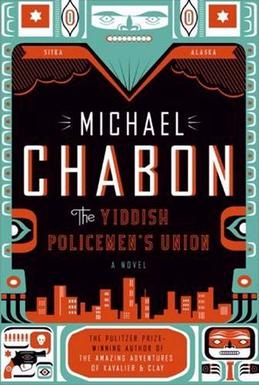
  • The Yiddish Policemen’s Union: A Novel—Michael Chabon

    I always feel a little sad upon finishing one of Michael Chabon’s novels. The Berkeley author weaves such wonderfully detailed tapestries of language and imagery that a feeling of loss is inevitable once the Big Finish has come and gone.

    That same feeling pervades The Yiddish Policemen’s Union from the jump as the world the characters have inhabited for 60 years is about to be flung on the trash heap of history. The alternative-history conceit is as follows: after the horror of World War II, and a collapse of the stillborn State of Israel, Jewish refugees were settled in an American Federal District hastily carved out of the Alaskan wilderness—and now the lease is up.

    As alcoholic policeman Meyer Landsman begins the search for who may have killed a fellow tenant of his own down-at-the-heels hotel, he heads toward the basement and this throw-away bit of narration: “[Landsman] checks behind the hot-water tanks, lashed to one another with scraps of steel like comrades in a doomed adventure.” The metaphor could be stretched to represent Landsman himself and his ex-wife/new-supervisor Bina Gelbfish who has been sent to tidy up all the loose ends at Sitka Central, and Landman’s investigation is one big throbbing nerve of a loose end.

    Drowning in the machinations of the District’s Hasidic mafia and a cold ocean of slivovitz, Landsman is haunted by a complex chess problem left by the dead tenant. Is it a clue? Is it just a reflection of his own hang-up caused by his chess champion father’s disappointment in him and resultant suicide? Chabon has explored these themes before. He revels in the arcane details of modern Judaica, and I was waiting past the 200-page mark for his patented Big Gay Character to show (he does, although posthumously).

    As Chabon has repeatedly shown—in his on-going bid to become a one-man Coen Brothers of the literary world, chewing up and spitting out genre after genre—it’s not the materials, plot points, or archetypes you start with, it’s how you play the familiar pieces that wins the game.

    Harper Perennial

    Also by this author:
    Gentleman of the Road: A Tale of Adventure

  • The Inexorable March [ficção]

    Jerome Michael Gonçalo parked his beater Toyota pick-up in the Vallejo Ferry Terminal garage, made the sign of the cross, and hustled off to the kiosk to pay. He always chuckled to himself when the machine asked how many days you wanted to stay; as if he would ever leave the vehicle—beat-up or not—overnight.

    Shit, only thing left would be the paint, he mused before the boat to San Francisco let out a warning blast that carried across the four lanes of Mare Island Way, telling all around that they had better get their asses in gear.

    Parking receipt in hand, Gonçalo checked for traffic—knowing that he, himself, was often coming in hot this time of morning—before sprinting across the expanse of asphalt against the light.

    “Jamoke! You almost missed it, brah,” an African-American ferryman half again his size shouted out from behind the aluminum plinth whose only discernible function was to shore up the man’s bulk as he pointed toward the waiting hydrofoil bobbing on the tide.

    One morning, Gonçalo made the mistake of introducing himself as “J-Mike,” which was immediately misconstrued as “Jamoke,” an appellation that gave the older, and much larger, man no end of amusement.

    “Devánte,” Gonçalo panted, disturbingly out-of-breath, “I knew you’d hold it for me, even if you had to grab that rope!”

    “No way, brah,” the man laughed, “we’re on a schedule. Very tight. Like your mom.”

    “Keep it professional, D.,” Gonçalo half-heartedly protested as he reached for the lanyard that held his transit card, only to realize that he wasn’t wearing it. He glanced toward the now-shuttered ticket windows at the terminal. Closed signs announced the inexorable march toward having every human interaction removed from one’s day. And yet, he silently bemoaned, Devánte persists.

    Gonçalo wondered what the folks that had worked those windows were waking up to today, having been replaced by a phone app. He weighed the odds of rushing back to the house for the card but quickly calculated that he’d never make it back in time for the next boat. That would mean driving into the City, a trip that took two maddening hours just days before.

    He had already come to terms with the fact that he would rather be skinned alive than undergo that ordeal again as he had barely made it to work the last time without pissing himself in traffic. Gonçalo had briefly thought about drinking less coffee in the morning and immediately realized that it would never actually happen. Public urination verses the murder charge that would surely follow going cold turkey was a steep, but manageable, price to pay.

    “Use the app, brah,” Devánte, having astutely read the situation, advised. “Your phone, Jamoke.”

    Gonçalo pivoted to attempting to use the very cell phone application that resulted in the sacking of the station agents and felt badly for a moment. The moment passed as the intended exchange failed with an abrasive electronic bleat.

    “Y-eaz-ou l-eaz-ose,” Devánte intoned, revealing a probable past spent somewhere on the midway. “Jump on, Jamoke. This cross must move.”

    Devánte’s counterpart on board the craft rattled off some half-heard, less-understood, instructions. Gonçalo stared blankly at the black rectangle in his hand as he moved toward an open seat and plopped down with a certain resignation.

    All morning, Cassandras on the local news gleefully warned of power blackouts and the possible closure of outdoor public spaces as an impending heatwave threatened to blanket the entire West. Gonçalo had chosen to wear a leaf-patterned Hawaiian shirt in a light fabric, although now he was feeling that perhaps it was sending the wrong message about his mood.

    As the engines below the craft begin to churn the cold morning waters of the Bay, he thought about stepping outside in the quickly warming air and slipping unseen over the rail, his cell phone dropping from his hand and sinking to the muddy bottom even quicker than he himself would.

  • The Brautigan Question [poema]

    Careened on the hand-me-down couch
    Slowly sinking into a misshapen beachhead of cushions
    I was reading a slim volume of early writings of a dead poet
    When my wife came into the room asking,
    “How does it feel to wash your balls with a city?”

    Well now, that’s a question fraught with foam and froth
    One must take into account all sorts of surfactants
    Then I recalled that someone had gifted her
    A soap in the shape of the Emerald City
    All green towers, minarets, and flying buttresses

    I closed the book and put it down, knowing that nothing
    The dead poet had written up to that point in his career
    Was going to measure up to that question
    I thought about it for a second and had to admit
    “It was nice.”

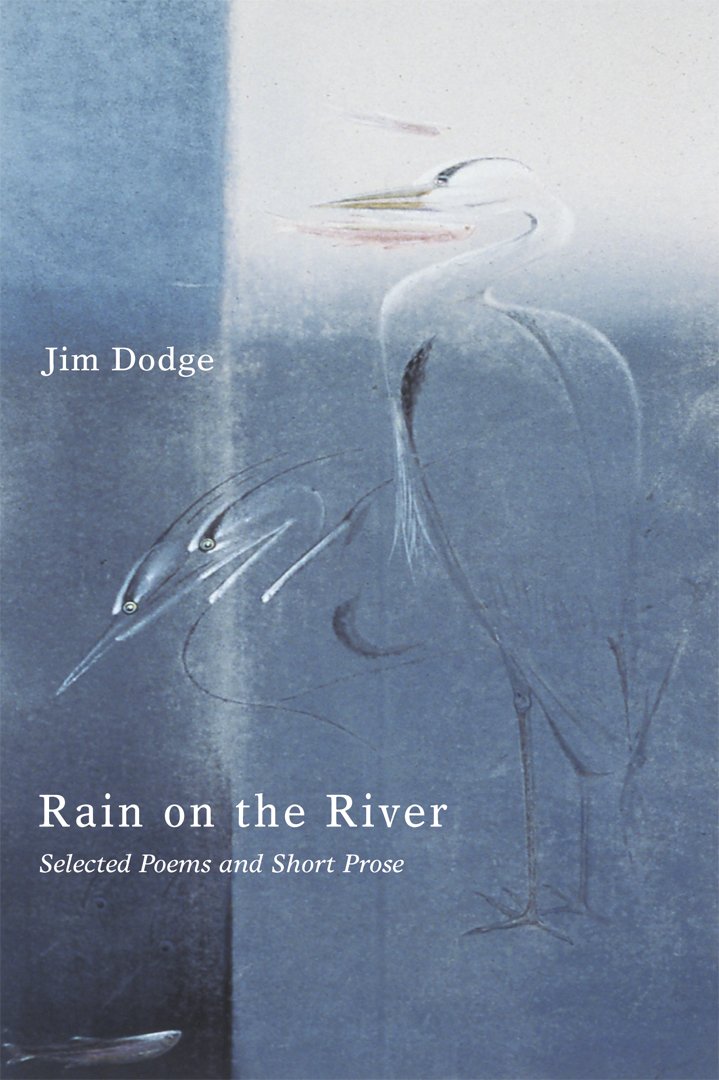
  • Rain on the River: New and Selected Poems and Short Prose—Jim Dodge

    Once and a while, if you’re lucky, you just might run into someone who seems like they have it all figured out; someone who by virtue of example shows you another way of looking at the world and your place in it.

    If you casually told them that you were tempted to follow his or her example (and that person wasn’t driven by ego or fanaticism) that person might look at you like you were crazy, then maybe laugh, and try to talk you out of it. That person might even explain to you why you shouldn’t write in second person narrative. For me that person was Jim Dodge.

    I had the extreme pleasure of taking Jim’s creative writing class at Humboldt State back in the early ’90s, and in retrospect, I should have dropped all my other classes and just hung out with him all day. Oh well, live and learn—which is also the message of much of Dodge’s output: any one of his three novels or the flurry of chapbooks and loose poems that follow in his literary wake might teach you that.

    Rain on the River collects Dodge’s short-form musings from the late ’80s through when it was published in 2002, and during which time, Dodge married his long-time companion and became a father. Many of the later poems deal with the incredible sense of amazement he seemed to be dialed into at that point in his life.

    Dodge’s poetry combines the wonder of some of Richard Brautigan’s more innocent works and the natural familiarity of Gary Snyder, a fellow traveler who Dodge attributes with changing the direction of his life. Dodge, a Humboldt fisheries major at the time, went multi-disciplinarian after reading Snyder’s Hay for the Horses. Dodge’s mixture of Zen awareness and working class perception mirrors Snyder’s own sensibilities.

    In Fishing Devil’s Hole at the Peak of Spring, Dodge relates an archetypical steep downhill battle through briar and bramble (and occasional unexpected flower-strewn meadow) to reach a secret fishing hole, only to lose his fish and end up ass-over-teakettle in the freezing water to which he exclaims:

    “Yarrrrrggggggggaaaaaahhhhhhhhhhh!”
    Yes. Yes by everything holy, yes!
    Even better.

    He writes at his most beatific in a bone-deep closing triptych/manifesto, Holy Shit.

    I believe every atom of creation
    is indelibly printed with divinity.
    I believe in the warm peach
    rolled in the palm of my hand.
    I believe God plays saxophone
    and the Holy Ghost loves to dance.

    Grove Press

    Also by this author:
    Always Something

  • The Savage Detectives: A Novel—Roberto Bolaño

    The release of an English translation of Chilean author Roberto Bolaño’s novel The Savage Detectives went head-to-head with the appearance of Denis Johnson’s Tree of Smoke for 2007’s literary news of the year.

    Lucky for us, Bolaño’s novel turned out to be every bit as great as the hype. Long known and respected by Latin American readers, Bolaño was a bit of mystery for most English monolinguists who, if hip to his writings at all, had to subsist on a few slim volumes published by New Directions.

    With the heavyweight house of Farrar, Straus and Giroux picking up the mantle and feature-length articles in the New Yorker and The New York Review of Books touting the novel’s many charms, Bolaño was the toast of the literary world—four years after his death in Spain of liver failure.

    The Savage Detectives begins in a mid-1970s Mexico City where a young poet, Juan García Madero, is invited to join a mysterious fraternity of writers calling themselves “visceral realists.” To call the group a movement is a bit of a stretch as no one, García Madero especially, knows (or is willing to say) exactly what visceral realism is. This doesn’t stop the group’s leaders, Ulises Lima and Arturo Belano (a thin, thinly disguised Bolaño) from conducting purges that would make a Maoist nervous.

    The writers prowl the streets and back alleys of Mexico City, constantly writing, having sex, getting drunk, and ultimately running afoul of a killer pimp and his corrupt police buddies. As one does. Of course, this encapsulation does rough injustice to Bolaño’s kaleidoscope of richly drawn characters, some of which—like rare desert flowers—bloom once, fade, and are never seen again.

    The middle of the book picks up after the poets have returned from the desert where they had been searching for the mysterious poet who started the original visceral realism movement in the 1920s. For the next 400 pages, we see Lima and Belano through the eyes of people who cross paths with them in a 20-year span ending in 1996. This fractured faux-oral biography plays with the notion of identity while giving the disorienting, yet thrilling, feeling of looking at the pair through a many-faceted diamond.

    The final third returns to the Sonoran Desert to tell the story of what happened to Lima, Belano, García Madero, and wayward prostitute Lupe on their search for the elusive Cesárea Tinajero. To paraphrase García Madero: When it was all over, I felt like I knew every inch of that f’ing country. Even more, I felt I was born there.

    Picador

    Also by this author:
    The Insufferable Gaucho
    The Return
    The Romantic Dogs

  • The Message [poema]

    Tuesday morning the rain stops.
    Underneath the swinging bridge, the creek
    was awake all night and now

    runs rampant. Cross to the parlor where
    cool hands have built a roaring
    welcome. After endless summer days

    spent steeped in light, oak-bound heat
    is now released and supplants the gray.
    On the porch, the old men speak

    with tongues of fire, both spirited
    and holy. Inside, the wood
    relates the original story—

    an old celestial game of
    telephone. The message started out
    in violence—a roiling

    furnace burning since the sky began.
    Today, sitting by the hearth,
    the word has turned to love—and two hearts

    that were embers—are now suns.

    Photo/Ray Larsen